View in your browser
                      ECOSYSTEM INSIDER                     
Ecosystem Insider bring you news from the IUCN Commission on Ecosystem Management
September 2026 Edition

Dear CEM members,

We are glad to share with you the second issue of the 2026 Ecosystem Insider Newsletter by the IUCN Commission on Ecosystem Management.

CEM Highlights
The IUCN CEM Wetland Ecosystems Specialist Group at the II Mesoamerican Symposium on Freshwater Biodiversity Conservation

By: Yasmín Quintana and Tatiana Lobato
Wetlands Ecosystem Specialist Group Co-Lead and Lead

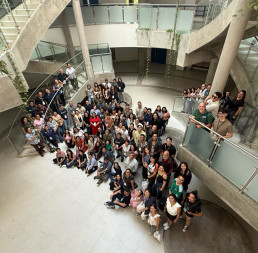
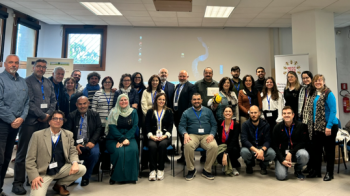
From 24–26 June 2026, San Pedro Sula, Honduras, hosted the II Mesoamerican Symposium on Freshwater Biodiversity Conservation, which brought together more than 200 researchers, students and conservation practitioners from 10 countries. The event was hosted by the Autonomous National University of Honduras (UNAH), Campus Cortés, through its Honduran Institute for Biological and Environmental Research (IBIOAH), with support from the IUCN SSC Freshwater Conservation Committee, the IUCN SSC Center for Species Survival (CSS): Freshwater, hosted by Shedd Aquarium, and the Mesoamerican Alliance for Freshwater Biodiversity Conservation.

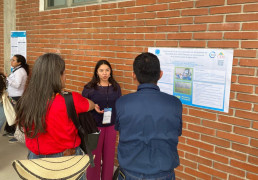
The IUCN CEM Wetland Ecosystems Specialist Group (WESG) joined the scientific programme with the poster "Efforts of the IUCN-CEM Wetland Ecosystems Specialist Group for the conservation of freshwater biodiversity," presented by Dr Tatiana Lobato de Magalhães (Universidad Autónoma de Querétaro, Mexico), Lead of the WESG and Deputy Chair of the CEM Steering Committee and Dr. Yasmín Quintana (Shedd Aquarium’s Center for Species Survival: Freshwater), Co-Lead of the same group. Displayed during the poster session, the contribution introduced the Group's structure, thematic priorities, and current lines of work to an audience largely composed of early-career scientists and field practitioners, many of them encountering CEM's ecosystem-based framing for the first time.

Several of the symposium's strongest contributions were about species diversity, biomonitoring, citizen science, and ecosystem conservation, among other topics. Presenting the WESG alongside this work positioned wetland ecosystem management as a natural complement to species-focused conservation, rather than a parallel conversation.

Beyond visibility, the presentation opened a recruitment and collaboration channel into a region where CEM's wetland expertise is barely represented.  The symposium closed with a formal call to convene a III Symposium in two years, an opportunity for the WESG, now a member of the Mesoamerican Alliance for Freshwater Biodiversity Conservation, to move from presence to programme, elevating freshwater wetlands in the region.

Presenting the IUCN CEM Wetland Ecosystems Specialist Group (WESG) at the Mesoamerican Symposium on Freshwater Biodiversity Conservation. Photo: Jorge Polo.

Symposium participants included researchers, students and conservation practitioners from 10 countries. Photo: Felix Guerrero.

 
CEM's Agroecosystems Specialist Group appointed as lead for IUCN Cross-Commission Working Group on "Agriculture and Food Systems and Biodiversity"

During the WCC2025, the IUCN Assembly adopted Resolution 002: "Accelerating action for nature-positive, sustainable agriculture and food systems" requesting the Council, Commission Chairs, and the Director General to establish a cross-Commission IUCN Working Group on “Agriculture and Food Systems and Biodiversity”. In coordination with IUCN's Food and Agricultural Systems (IUCN FAS) team in the Secretariat, CEM has been appointed as lead for this working group through its Agroecosystems Specialist Group. Two commissions (CEESP and WCEL) have already appointed focal points, if you belong to a thematic or specialist group that would be relevant for this cross-commission working group and wuld like to contribute please get in contact with Vania Olmos Lay (vrolmoslau@gmail.com).

 
CEM’s Social Ecological Resilience Thematic Group Networking and Engagement Initiatives 

Jenny Hodbod and Emmanuel Gichuru 
IUCN CEM SERT Lead and Co-Lead

In August we held the first event in our new series of SERT Networking Sessions - this will be a regular online gathering space for informal conversations during which SERT members can share experiences, exchange insights, and connect across regions — no slides, no prep, no pressure. Simply a space to arrive as you are, share experience-based insights, and learn from others walking similar path

When? The second Tuesday of every even-numbered month (Aug, Oct, Dec etc.) at 14:00 BST/GMT (08:00 CST / 09:00 MST / 15:00 CET / 16:00 CAT / 19:30 IST). If you’d like the calendar invite, please let me know via this form: https://forms.cloud.microsoft/e/8Bw7AqGDRD 

We are also looking for speakers in our webinar series - these will be every 3 or 6 months, depending on interest, and will hopefully integrate two or three SERT members into a 60-minute session. Please express your interest by completing this form: SERT Webinars - Expression of interest – https://forms.cloud.microsoft/e/yEHEtwLcvE 

Finally, we are preparing a 'New Member Onboarding' packet which will include an IUCN overview, Engage 'how to guide', Calendar etc. If other Thematic Groups have similar needs/content we’d love to share the effort - please email Jenny on j.e.hodbod@leeds.ac.uk.

 
Building biodiversity knowledge for action in Southern Africa

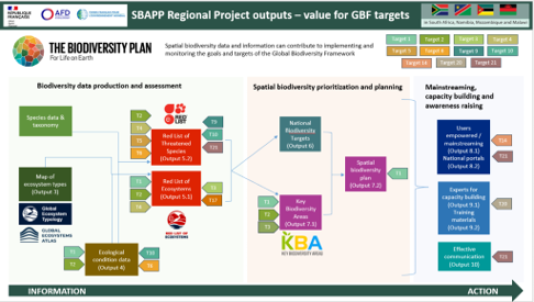
The SBAPP Regional Project brings together South Africa, Namibia, Mozambique and Malawi to strengthen spatial biodiversity assessment, prioritisation and planning and improve the use of biodiversity information in policy, planning and decision-making. Funded by the Agence Française de Développement (AFD) and Fonds Français pour l’Environnement Mondial (FFEM), the project promotes regional collaboration and knowledge exchange while supporting each country to develop nationally relevant biodiversity products. A key achievement has been the development and refinement of national ecosystem maps, strengthening the foundation for ecosystem assessment, conservation planning and biodiversity reporting across the region.

Learn more

ASAP Project components, objectives and expected outputs

 
The MEDIBEES: Conserving Mediterranean Honeybee Diversity for Resilient Agro-Ecosystems

The MEDIBEES project focuses on conserving the genetic diversity of Mediterranean honeybee subspecies to enhance sustainable agro ecosystems amid challenges like climate change and habitat degradation. It emphasizes the importance of protecting locally adapted bee populations and implementing conservation strategies that involve collaboration between researchers, beekeepers, and conservation organizations.

MEDIBEES project memberss at the 117th Meeting of the IUCN Council, Gland, 22-23 April 2026.

 
The Global Ecosystem Atlas 

The Global Ecosystems Atlas is a collaborative initiative to compile spatial information on the world’s ecosystems consistent with the IUCN Global Ecosystem Typology. The initiative is convened by the Group on Earth Observations (GEO) with the Secretariat of the Convention on Biological Diversity (CBD) and the International Union for Conservation of Nature (IUCN).

  • Murray, N. J., et al. (2026) The Global Ecosystems Atlas: comprehensive and systematic mapping of Earth's ecosystems. EcoEvoRxiv. https://doi.org/10.32942/X22Q3M
  • Global Ecosystems Atlas. (2026). Guidelines for developing national ecosystem maps (v1.0). Group on Earth Observations. https://doi.org/10.60566/cd13v-0me13
  • Buschke, F. et al. (2026) Reporting on the extent of natural ecosystems under the Kunming-Montreal Global Biodiversity Framework. EcoEvoRxiv https://doi.org/10.32942/X25955
  • Jones, K. R., Lötter, M., Costa, H. M., Surya, G., Rathbone, V., Matimele, H., Duarte, E., Alves, T., Macamo, C., Nicolau, D., Soares, M. G., Zolho, R., & Grantham, H. S. (2026). Assessment of ecosystem status in Mozambique and implications for environmental planning. Conservation Science and Practice, 8(4), e70189. https://doi.org/10.1111/CSP2.70189
  • Strohbach, B., Coetzee, M., Marais, E., & Maggs-Kölling, G. (n.d.). Ecosystems of Namibia Map vs4.0. In Zenodo. https://doi.org/10.5281/ZENODO.18057413
Awards

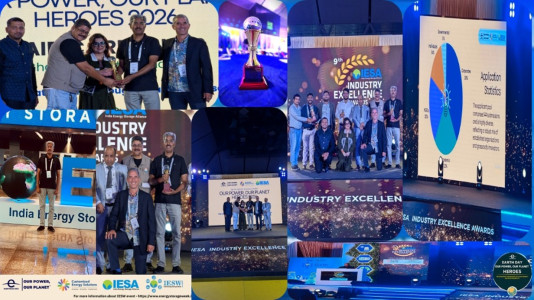
Vaidic Srijan LLP has experienced recognition, receiving the Planet Hero 2026 Award from EARTHDAY.ORG during the India Energy & Storage Week for their environmental efforts, following their previous accolades including the Water Hero award in 2019. The company expresses gratitude to its supporters, partners, and mentors for their contributions to its journey.

Raíces Sonoras: Young voices connecting science, nature and territories

Raíces Sonoras is the podcast of the Young Professionals Network (YPN) of the IUCN Commission on Ecosystem Management (CEM) for Mexico, Central America and the Caribbean. It is a volunteer-led initiative created by young professionals from the region with the aim of bringing science and ecosystem management closer to new audiences.

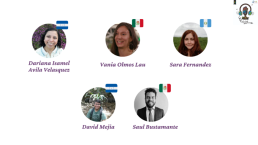
The idea began in 2023, led by Dariana, Vania, Sara, David, Saul, with the support of Rocío Cordoba from CEM. The project also received support through the CEM Small Grant, which helped move the idea forward and turn it into a reality, an initiative built by and for young professionals.

Across five episodes, Raíces Sonoras explores the five thematic areas of CEM: Red List of Ecosystems, Youth, Biodiversity, Nature-based Solutions, and Finance for Nature. Each episode brings together young voices and experiences from the region to explore these topics in a simple, accessible and locally connected way.

The podcast also incorporates sounds from nature as part of its storytelling, creating an experience that goes beyond listening to science and invites audiences to connect with the ecosystems that surround us.

The episodes will be released progressively over the coming months, giving each topic its own space and allowing listeners to discover the voices, experiences and people behind each episode.


Listen to Raíces Sonoras: YouTube: https://www.youtube.com/@IUCNCEM/podcasts  

IUCN official webpage 

What began as a youth-led volunteer initiative in one region now has the potential to grow, inspire new voices and eventually expand to other regions of the Commission on Ecosystem Management.

Apada Sahayak app 


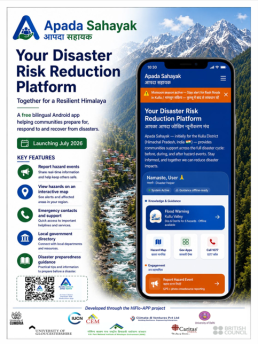
This July, Apada Sahayak a new Disaster Risk Reduction app launched in India, as a product of collaborative research in the Indian Himalaya.

This project has been built on local knowledge in support of effective disaster risk reduction that reflects local needs. Through workshops, field visits and community engagement, residents have played a central role in designing this app central to local needs, priorities and experience.

Funded by the British Council India, the project is led by colleagues from the University of Cumbria notably, Professor Ian Convery, IUCN CEM’s Regional-Vice Chair for Europe. 

Also, in collaboration with the University of Delhi, the G.B. Pant National Institute of Himalayan Environment, Caritas India, Climate-B Ventures Pvt Ltd and the IUCN Commission on Ecosystem Management.

Website: https://apadasahayak.com/

Play store (for use in India):

https://play.google.com/store/apps/details?id=com.hifloapp

Publications
Global Risks to Mangrove Ecosystems publication is out

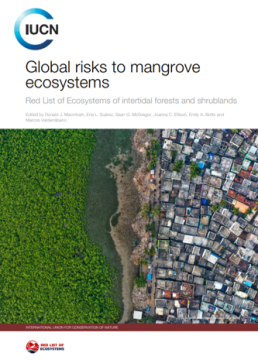
On the eve of the International Day for the Conservation of the Mangrove Ecosystem, celebrated annually on 26 July, the IUCN released the first global assessment of an entire ecosystem functional group, available through the IUCN Library: Global Risks to Mangrove Ecosystems.

The assessment applied the IUCN Red List of Ecosystems (RLE), one of the standardized risk assessment tools developed by experts from the IUCN Commission on Ecosystem Management (CEM), to evaluate the risk of collapse of mangroves across 34 provinces worldwide. The results reveal that 50% of the total assessed mangrove area is classified as Vulnerable, while 2.2% is classified as either Endangered or Critically Endangered. The assessment identifies reductions in geographic distribution and projected environmental degradation associated with sea-level rise as the main pathways threatening mangroves.

Several CEM experts contributed to this landmark global assessment. The assessment of the mangroves of the Red Sea and Gulf of Aden, led by Somaya Ghoraba - CEM Focal Point for North Africa, classified this province as Endangered. This high-risk status stems from significant pressures posed by projected climate change impacts and associated sea-level rise, highlighting the need for continued monitoring and targeted conservation efforts.

Mangrove risk assessments identify current and potential threats affecting mangroves globally, raise awareness of these threats, and provide valuable information to strengthen regional efforts to conserve and restore degraded mangrove ecosystems.

View the publication

Rethinking the Relationship Between Trees and Peatlands

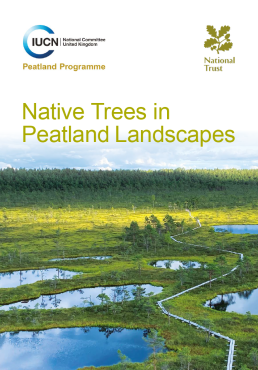
A new publication from the members of the IUCN CEM Peatland Ecosystems Specialist Group is challenging a long-standing assumption in UK ecosystem restoration: that trees and peatlands are inherently at odds. Native Trees in Peatland Landscapes, launched at the IUCN UK Peatland Programme Conference in June 2026 and published jointly with the UK’s National Trust, argues instead for a more integrated, landscape-scale approach that recognizes the important role native trees can play alongside healthy peatlands. 

The publication responds to a perceived tension that exists in many conservation contexts, where peatland restoration and woodland expansion are often planned separately. Drawing on scientific evidence, practical experience, and case studies from the UK and internationally, it highlights how native trees naturally occur in many temperate peatland systems, including bog woodlands, fen carr, and ecotones around peatlands. 

At the heart of the report is a simple but important principle: peatland hydrology must come first. The authors emphasise that tree planting or natural tree establishment on degraded and drained peatlands can worsen drying, carbon loss, and ecological decline. However, where peatland hydrology is healthy or restored, native trees can form part of diverse, resilient habitat mosaics that support biodiversity, climate adaptation, and ecosystem recovery. 

While the publication focuses on the UK context, its messages resonate globally. The report showcases examples of naturally treed peatlands and integrated restoration approaches, demonstrating the value of moving beyond rigid habitat boundaries and managing ecosystems as interconnected landscapes. It also calls for conservation practitioners, policymakers, and researchers to break down “habitat silos” and adopt collaborative, evidence-led approaches that balance site-specific needs with wider ecological processes. 

The publication concludes that restoring resilient ecosystems requires long-term thinking, the right intervention in the right place, and continued monitoring and research. By bringing together expertise from conservation organisations, government agencies, researchers, and land managers, Native Trees in Peatland Landscapes offers a valuable contribution to international discussions on ecosystem restoration and nature recovery. 

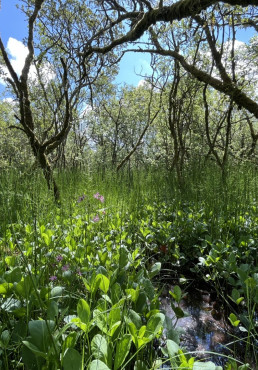
Native wet woodland at Goss Moor in Cornwall, Southwest England. Credit: Emma Duley, University of Plymouth.

Image: Front cover of the publication ‘Native Trees in Peatland Landscapes’, featuring Mukri Bog in Estonia by Martin Hallang.

Find out more and access the publication

 
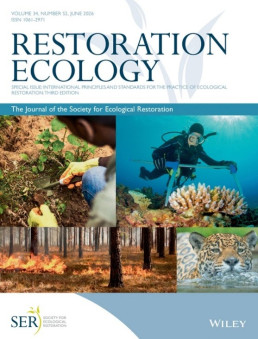
ERTG Contributions to the 3rd Edition of the SER International Principles & Standards for the Practice of Ecological Restoration

The Society for Ecological Restoration (SER) has released the Third Edition of the International Principles & Standards for the Practice of Ecological Restoration, a major global update strengthening the foundations of high-quality, ethical, and evidence-based restoration. IUCN CEM was a participating organisation in the development of this edition, with contributions from both incoming and returning members of the Ecosystem Restoration Thematic Group (ERTG).

Four ERTG Core Group members Cara Nelson, Emily Gonzales, Fangyuan Hua, and Renee Young were directly involved in the development and review process. Their contributions strengthened the Standards’ treatment of landscape-scale restoration, reference models, monitoring and adaptive management, restoration finance, and the integration of social, cultural, and Indigenous perspectives.

The updated Standards directly support delivery of the IUCN Programme Nature 2030, particularly through advancing restoration quality and coherence across Land, Water, Climate, and People. ERTG involvement ensured the Standards align with the Programme’s emphasis on nature-positive action, evidence-based decision-making, and equitable, inclusive approaches to restoration. Their contributions reinforce the role of IUCN CEM in shaping global restoration practice and strengthening the enabling conditions required to scale restoration effectively.

This edition also draws on insights from global fora, regional case studies, and collaborative work across SER, FAO, IUCN, and partners - areas where ERTG members have been actively engaged. Their participation ensures the Standards remain scientifically robust, globally relevant, and practical for practitioners, policymakers, and organisations working across diverse ecosystems.

The Third Edition of the SER Standards is now available online and remains an essential resource for anyone designing, implementing, or evaluating ecological restoration.

View the full publication here.

CEM Thematic Group & Member Features

CEM Thematic Group Features
Low-impact watershed and forest restoration in Mediterranean Ecosystems

Author: Javier Maestre Gasteazi
Leader of the IUCN CEM Mediterranean Type Ecosystems Specialist Group
Chief Operating Officer, Forestales de San Francisco del Sureste, S.L.

Soil loss is one of the main challenges for the conservation and restoration of Mediterranean ecosystems. Irregular rainfall, long dry periods and intense rainfall events, together with disturbances such as wildfires, loss of vegetation cover or certain forestry operations, can considerably accelerate erosion processes.

However, erosion should not be understood as an enemy to be fought at all costs. Erosion, sediment transport and deposition are part of the natural dynamics of the landscape: they connect different parts of a catchment, redistribute materials and contribute to the functioning of downstream ecosystems. The problem arises when their intensity exceeds the system’s recovery capacity, causes excessive soil loss, or creates risks for communities and infrastructure.

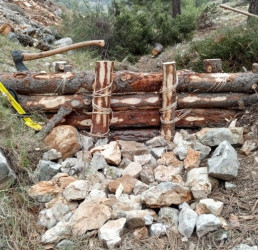
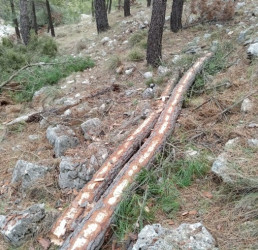
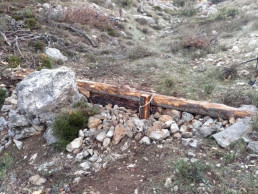
From this perspective, we propose a low-impact approach to watershed and forest restoration, based on intervening only where necessary through numerous small, permeable structures distributed across the landscape. Wooden fascines, stone or wooden check dams, small gabions and other simple structures can locally reduce runoff velocity and energy, promote infiltration, and retain part of the soil close to where it begins to be mobilised.

This approach incorporates two complementary concepts: distributed retention and territorial soil equity. Rather than concentrating large amounts of sediment at a few points, distributed retention creates multiple small deposition areas. Territorial soil equity seeks to keep this resource functionally distributed throughout the ecosystem, where it can continue to store water and nutrients, support vegetation and promote ecological recovery.

The aim is neither uniform distribution nor stopping all sediment transport. It is to prevent excessive losses and unnecessary concentrations, conserving soil where it is needed without disrupting natural transfers to downstream ecosystems.

Many of these structures can also be temporary. Following disturbances such as wildfires—an increasingly important issue in Mediterranean landscapes—or logging and thinning operations that temporarily expose the soil, they can provide support during the most vulnerable phase. The objective is to assist the ecosystem until vegetation progressively recovers its capacity to intercept rainfall, reduce runoff and stabilise the soil.

Revegetation with native species is therefore inseparable from this approach. Esparto grass (Stipa tenacissima) is particularly valuable in semi-arid Mediterranean environments. Sánchez and Puigdefábregas (1994), in “Interactions of plant growth and sediment movement on slopes in a semi-arid environment”, showed how its tussocks intercept sediment movement and create small soil accumulations upslope. Cerdà (1997), in “The effect of patchy distribution of Stipa tenacissima L. on runoff and erosion”, subsequently found, using rainfall simulations in south-eastern Spain, that runoff and erosion beneath tussocks were almost negligible and infiltration rates were higher than in bare areas. Esparto grasslands thus operate as a natural system for redistributing water and soil at hillslope scale.

These principles are being applied in projects promoted by Alboloduy Town Council, a small municipality in Almería within Sierra Nevada Natural Park, and implemented by Forestales de San Francisco del Sureste S.L., a company specialising in non-mechanised forestry in areas of high ecological value and low-impact watershed and forest restoration.

In the Finca de La Solana and Sendero del Salto del Caballo project (2024), fascines and check dams were distributed across the landscape and combined with forestry treatments and revegetation. Wood generated by pruning and thinning was reused to build the retention structures themselves, allowing the project to reuse its own vegetation residues.

At El Gamonal, immediately above the urban area, successive interventions have evolved from defensive structures close to homes towards a broader hillslope approach. The El Gamonal Hydrological-Forest Restoration and Correction Project (2026) incorporates check dams, fascines, stabilisation with plant-based materials and esparto planting, acting on water and soil dynamics before transported materials reach the lower slopes.

This model has a further advantage for small rural communities. It does not necessarily require large works implemented all at once: interventions can be developed progressively according to needs and available resources. Many can also be built, inspected and maintained by local workers with appropriate technical guidance and training. Restoration can therefore generate local knowledge, employment and management capacity, while using nearby materials, reducing mechanisation and achieving a high degree of landscape integration.

Alboloduy also shows how a small municipality with limited resources can build a medium-term environmental strategy through active fundraising and the successive implementation of projects.

Ultimately, low-impact watershed and forest restoration is based on a simple idea: it is not about stopping the landscape, but accompanying its dynamics. We should intervene where and when necessary, conserve soil where it continues to perform essential functions, and allow vegetation and the ecosystem itself to progressively regain the leading role.

Social Ecological Resilience Thematic (SERT) Group
Biodiversity and ecological value of channelised waterways

Author: Pablo Guillermo Rimoldi, PhD
IUCN CEM MEMBER 

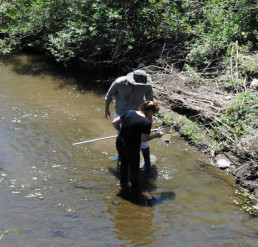
We share a recent open-access study of Arroyo Canal Candelaria, a 42-km channelised watercourse in the Argentine Pampas. The study assessed biodiversity and ecological condition across six sites using four biological groups: benthic macroinvertebrates, herpetofauna, birds and medium- to large-sized mammals.

We share a recent open-access study of Arroyo Canal Candelaria, a 42-km channelised watercourse in the Argentine Pampas. The study assessed biodiversity and ecological condition across six sites using four biological groups: benthic macroinvertebrates, herpetofauna, birds and medium- to large-sized mammals.

The findings show that species richness generally increased downstream, with birds increasing from 40 to 75 species, herpetofauna from 7 to 18 species, and mammals from 4 to 9 species. Macroinvertebrate diversity and benthic ecological indices also showed improvement downstream. However, tolerant species remained dominant, reflecting continued pressures from intensive agriculture, urbanisation and hydromorphological modification.

The study demonstrates that even heavily modified and channelised waterways can retain important ecological value and contribute to biodiversity and potential ecological connectivity. It recommends incorporating such waterways into freshwater assessment, basin planning and restoration, including reducing pollution, improving riparian habitats, protecting bank vegetation and maintaining longitudinal connectivity.

This member contribution is particularly relevant to IUCN CEM’s Nature 2030 Water priority because it demonstrates how biodiversity monitoring can inform water governance and conservation decisions, especially in agricultural landscapes where modified waterways are often overlooked.

Learn  more

 
CERS: A Practical Framework for Stronger Community Conservation Enterprises

Author: Marisa C. Rodrigues, PhD
IUCN CEM MEMBER
Managing Director | marisa@staygroundd.com | groundd.earth | Linkedin
Member of Women in Nature Network - WiNN 

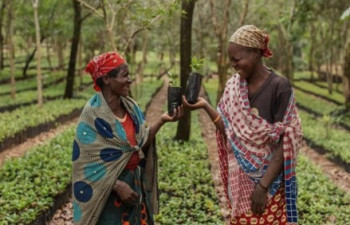
A community producer group with coffee tree seedlings — the kind of enterprise CERS is designed to assess.
Photo credit: Gorongosa Restoration Project

Community-led enterprises linked to agriculture, forestry, restoration, tourism and sustainable natural resource use can play an important role in connecting local livelihoods with ecosystem conservation. However, their long-term success depends on more than promising business ideas or access to funding.

Through Groundd, the Community Conservation Enterprises Readiness System (CERS) has been developed as a practical framework to assess and strengthen the resilience of community conservation enterprises. CERS examines enterprises across four interconnected dimensions:

  • Conditions for Success – governance, institutions, partnerships, infrastructure, policy and access to technical support.
  • Thriving Enterprises – business viability, markets, operations, risks and opportunities for growth.
  • Community & Culture Alignment – local ownership, participation, equity, socio-economic benefits, cultural values and traditional knowledge.
  • Nature’s Balance – impacts and interactions with biodiversity, ecosystems, natural resources and climate.

The framework is based on the understanding that conservation enterprises should not be assessed solely on their economic potential or environmental objectives. Long-term resilience emerges from the interaction between healthy ecosystems, viable economic models, supportive institutions and empowered communities.

CERS combines community engagement and field evidence with business, governance and ecological analysis to identify strengths, barriers and opportunities. Rather than functioning as an audit, it is designed as a learning and decision-support tool, helping stakeholders understand where an enterprise is performing well, what is limiting its progress, and what types of investment, partnerships or capacity building could have the greatest impact.

The framework has been tested with community enterprises across different landscapes and value chains and continues to evolve through application in new contexts.

For the IUCN Nature 2030 Programme, CERS has relevance to People, Land and Climate, offering a practical approach for translating social-ecological resilience into conservation investment and implementation.

Learn more

Social Ecological Resilience Thematic (SERT) Group
From Conservation to NatureScaping™: Building Social-Ecological Resilience in India 

Author: Dr. Satya Prakash Mehra, India
IUCN CEM MEMBER

Dr. Satya Prakash Mehra’s three decades of conservation work in Rajasthan demonstrate that lasting conservation is strongest when people and nature are treated as interconnected systems. This experience led to the development of NatureScaping™, an approach that integrates biodiversity conservation, traditional knowledge, community stewardship, livelihoods and human wellbeing.

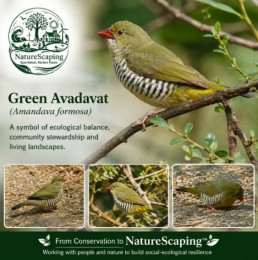
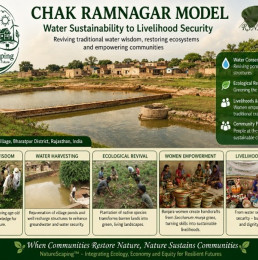
Two initiatives illustrate this approach. In the Abu Hills, the Green Avadavat became a flagship for engaging local tribal youth, including former bird trappers, and transforming their ecological knowledge into conservation and livelihood opportunities. In Chak Ramnagar, traditional water-harvesting knowledge was combined with restoration of village ponds and support for women to develop handicrafts from locally available Saccharum munja grass, linking ecological restoration with water security and income generation.

The Green Avadavat (Amandava formosa), flagship of the Abu Model, became a bridge between biodiversity conservation, local ecological knowledge, community stewardship and sustainable livelihood.

The Chak Ramnagar Model demonstrates how traditional water knowledge, ecological restoration and community skills can connect water security with livelihood resilience

Together, these experiences demonstrate a pathway from local knowledge and community participation to ecological recovery, livelihood opportunities and long-term stewardship.

NatureScaping™ therefore promotes landscapes where ecology, economy and equity reinforce one another, showing how conservation can become a practical pathway towards social-ecological resilience.

More information can be found here.

Contribution to Nature Platform 

The Contributions for Nature Platform enables IUCN constituents to document their intended contributions to the IUCN Nature 2030 Programme.  

All IUCN constituents are strongly encouraged to use the Contributions for Nature Platform for all place‑based contributions. This includes Commission Members, IUCN Member organisations (non-governmental organisations, Indigenous Peoples’ organisations), and government members.

Access the Contributions for Nature platform and find guidance on its use here.

Past Events
CEM Dialogues 
Biodiversity, Climate and Beyond 

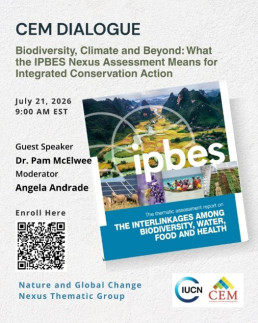
On 21 July, the Nature and Global Change Nexus Thematic Group held its first CEM Dialogue, featuring Dr. Pamela McElwee, Professor at Rutgers University and Co-Chair of the IPBES Nexus Assessment, with the presentation “Biodiversity, Climate and Beyond: What the IPBES Nexus Assessment Means for Integrated Conservation Action.” 

Pam presented key findings from the IPBES Nexus Assessment, highlighting the strong interdependencies among biodiversity, climate change, water, food and health, and the implications of these linkages for conservation policy and practice. Drawing on more than 6,500 knowledge sources, the Assessment shows that addressing these challenges separately can overlook important synergies and trade-offs, while integrated responses—including Nature-based Solutions, landscape approaches and coordinated cross-sectoral governance—can generate benefits across several dimensions simultaneously.

An important conclusion from the session was the need to move beyond recognising the biodiversity–climate nexus towards its practical application. Actions should be designed and assessed from a systems perspective, explicitly considering synergies and trade-offs across biodiversity, climate, water, food and human well-being. The discussion also reinforced the importance of translating the extensive evidence generated by the Nexus Assessment into concrete policy and management approaches and of identifying areas where CEM members can contribute through specific research, papers, guidance and case studies.

The Dialogue provided an excellent starting point for the work of the Nature and Global Change Nexus Thematic Group, reinforcing the need to move from recognising the biodiversity–climate nexus to applying it in practice. The discussion highlighted the importance of addressing synergies and trade-offs across biodiversity, climate, water, food and health, and of identifying concrete opportunities for CEM members to contribute through research, case studies, technical papers and other knowledge products. 

Watch the recording of the session here.

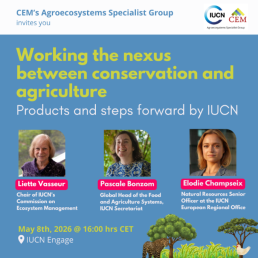
Working the nexus between conservation and agriculture; Products and steps forward by IUCN 

As part of the collaboration between CEM's Agroecosystems Specialist Group and IUCN FAS, a webinar was organized to showcase the products and actions IUCN is doing to work the nexus and gaps between conservation and agriculture. Participants were also able to share what they envision as next steps. Recording and presentations can be found on IUCN Engage.

Watch the recording of the session here.

Freshwater Wetland Ecosystems: Global Conservation and Assessment

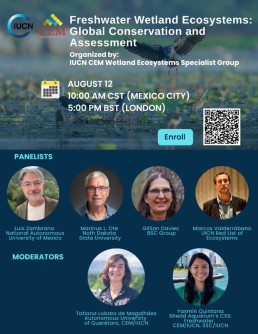
On 12 August, the IUCN CEM Wetlands Ecosystem Specialist Group held its first Dialogue, featuring M.Sc. Gillian Davies, Senior Ecologist, BCS Group, Society of Wetland Scientists, and a specialist in wetland policy and rights-based conservation, Dr Luis Zambrano, Universidad Nacional Autónoma de México (UNAM), internationally recognized freshwater ecologist, Dr Marinus Otte, Editor-in-Chief of Wetlands and expert on wetland conservation, and Dr Marcos Valderrabano, IUCN Secretariat and the Red List of Ecosystems Programme with the presentation “Freshwater Wetland Ecosystems: Global Conservation and Assessment.” Moderated by the groups Lead: Dr Tatiana Lobato de Magalhães and Co-Lead: Dr Yasmin Quintana. 

This distinguished panel of international experts presented during the dialogue, advances and challenges in freshwater wetland conservation, assessment methodologies, emerging technologies, and the critical role of Indigenous People and local communities in wetland stewardship. The panelists also discussed the greatest challenges and opportunities for freshwater wetland conservation over the next decade and much more. Find more information on the session and panellists on IUCN Engage. 

Watch the full webinar here.

Social Perspective on Forest Governance – Ecosystem Governance Thematic Group

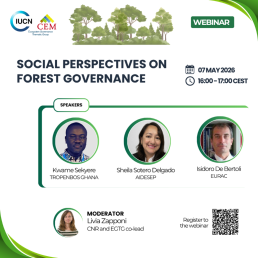
On 7 May, the IUCN CEM Ecosystem Governance Thematic Group, held it’s first CEM Dialogue on Social Perspectives on Forest Governance. This event brought together diverse perspectives from key speakers Kwame Sekyere, from Tropenbos Ghana, Sheila Sotero Delgado from AIDESEP, and Isidoro De Bortoli from EURAC, to explore how regions can strengthen forest governance, participation and sustainability. 

Kwame Sekyere, from Tropenbos Ghana, presented valuable insights on their approach to, community-led forest governance initiatives in Ghana, through case studies on restoration and agroforestry landscapes. Sheila Sotero Delgado from AIDESEP, shared Indigenous Forest perspectives from their work in the Peruvian amazon which focused on adapting national climate policies and programs to ensure forest territorial rights, governance, and the implementation of the Amazonian Indigenous REDD+ strategy. Isidoro De Bortoli from EURAC, presented the Central Mountains initiative, highlighting new cross-border inclusive governance models for the Alpine–Carpathian region, with a focus on youth insights. Find out more about the session on IUCN Engage. 

Watch the full webinar here. 

Upcoming Events
The NetworkNature Annual Event 2026   

The NetworkNature Annual Event 2026 – Futures with Nature will take place in Paris on 3 November 2026, bringing together around 500 stakeholders to explore different visions of what resilient and thriving futures could look like, and how to get there. Through dynamic pitches, panel discussions and the Future Postcards exhibition, the event will highlight wise, brave and forward-looking ideas, initiatives, policies and projects that make these futures tangible today while preparing for future challenges.

Find more information about the Annual Event and Register for NetworkNature Week.

For more information, contact: Daniela Rizzi, PhD, daniela.rizzi@iclei.org, Senior Expert for Nature-based Solutions and Biodiversity. 

ICLEI European Secretariat ● Leopoldring 3 ● 79098 Freiburg ● Germany

CBD CoP17

The United Nations Convention on Biological Diversity (CBD), is taking place in Yerevan, Armenia, from October 19-30, 2026. With an estimated attendance of 23,000 and one of the world’s most important international environmental treaties, it is crucial to the review of the Kunming-Montreal Global Biodiversity Framework. Here, IUCN will host a pavilion, Unite for Nature – Home of the Union, which will offer IUCN constituents an event space to demonstrate how their work contributes to the implementation of the Kunming-Montreal Global Biodiversity Framework (KMGBF), in alignment with IUCN’s objectives and messages for this COP, the Union’s vision and mission as well as with its Programme – Nature 2030.

 
Newsletters


Subscribe to an IUCN Newsletter

International Union for Conservation of Nature (IUCN) © 2026

The Ecosystem Insider aims to keep IUCN CEM members, IUCN staff, and the wider IUCN network up-to-date with ecosystem management news and announcements. 

Unsubscribe

Thank you for reading us and don’t forget to follow us on our social media channels

 Facebook  Linkedin  Instagram  Youtube