View in your browser
Donate now

 Facebook  X / Twitter  Web  Linkedin  Instagram
A Call from the Wild
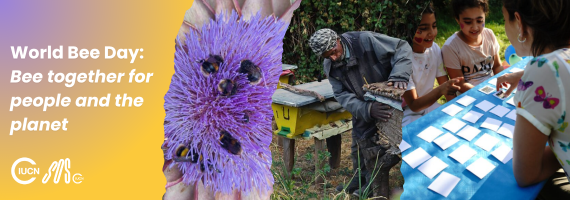
World Bee Day
New momentum for pollinator conservation


Pollinators are disappearing at an alarming rate. Wild bees, butterflies, hoverflies, moths and other species are under growing pressure from habitat loss, intensive agriculture, pollution, invasive species and climate change. 

The consequences reach far beyond nature. Pollinators support food systems, ecosystem resilience and biodiversity worldwide. 

But there is also growing momentum behind solutions. New initiatives are emerging to restore habitats, improve monitoring, strengthen policy and support practical conservation on the ground. 

This World Bee Day, under the theme “Bee together for people and the planet – A partnership that sustains us all.”, we spotlight some of the initiatives and the people driving efforts to scale up pollinator conservation.

Did you know? 

  • 🌼 Around 75% of the world’s leading food crops depend at least partly on pollinators, including coffee, almonds, apples and tomatoes. 
  • 🐝 There are more than 21,000 known bee species globally, but bees are only part of the story. Butterflies, moths, beetles, hoverflies, birds and even bats also play essential pollination roles. 
  • 🐝 Nearly 100 additional wild bee species in Europe are now classified as threatened in the latest IUCN Red List assessments. 
  • 🌍 Across the IUCN Species Survival Commission (SSC), there are several specialist groups dedicated to pollinators, including the IUCN SSC groups on bumblebees, wild bees and butterflies and moths, that help drive research, assessments and conservation action worldwide. 

Pollinator conservation is gaining ground globally 

New international coordination efforts are emerging 

Pollinator decline is increasingly recognised as a global challenge, with growing international efforts to improve coordination, research and conservation action. 

The Food and Agriculture Organization (FAO) is currently consulting governments, researchers and stakeholders on the development of a Global Pollinator Platform aimed at improving global cooperation, knowledge-sharing and policy support for pollinator conservation.  

The initiative builds on the Convention on Biological Diversity’s International Pollinators Initiative, which marks its 25th anniversary this year. 

Africa: linking pollinators and livelihoods 

Across Africa, pollinator conservation is increasingly being linked with ecosystem restoration, sustainable production and local livelihoods. 

One example is BIODEV2030, implemented by IUCN and WWF-France, coordinated by Expertise France and funded by AFD. The initiative supports biodiversity mainstreaming through science-based approaches and multi-stakeholder dialogue, helping integrate biodiversity and nature-based solutions into production sectors and promote more sustainable practices. 

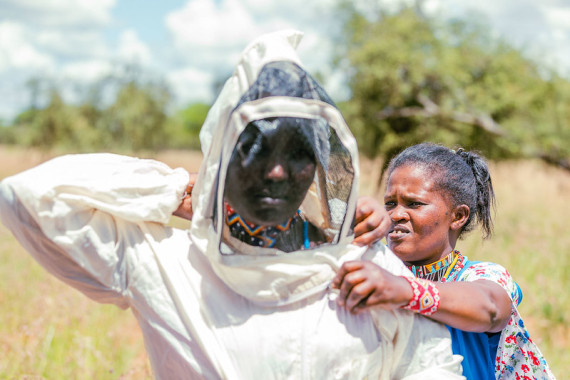
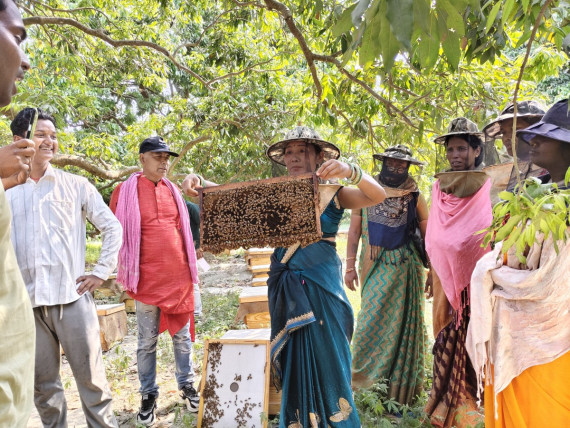
On the ground, these links are already taking shape. In Iloirero, Kenya, 70 women transformed invasive Ipomoea weeds into an opportunity through beekeeping and a grass seed bank, restoring land while supporting livelihoods and education. In Ethiopia’s Bale Mountains, farmers are also using beekeeping to generate income while helping conserve biodiversity. 

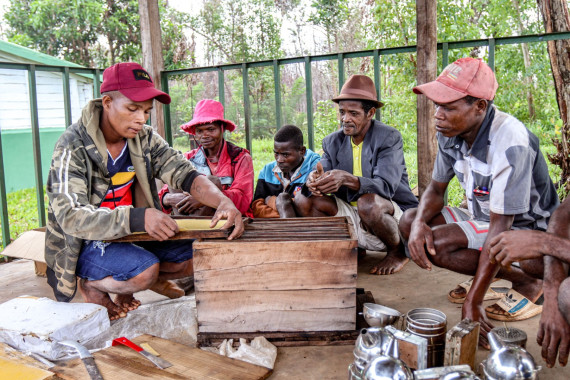
Similar approaches are also emerging in Madagascar. In the Manombo forests in south-eastern Madagascar, a project led by GERP with support from SOS Lemurs is promoting beekeeping as a way to reduce pressure on forests threatened by bushfires, while creating sustainable incomes and supporting women’s participation.

Latin America: legal recognition for native pollinators 

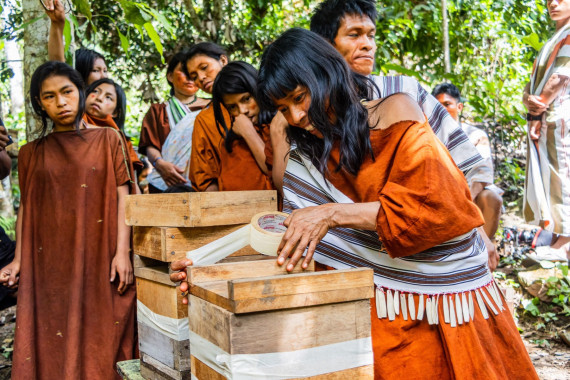
In a landmark development, municipalities in the Peruvian Amazon granted legal rights to native stingless bees last October, believed to be the first known legal recognition of rights for insects anywhere in the world. 

The measures emerged through advocacy led by scientists and Indigenous communities seeking stronger protection for pollinators and their habitats. 

Southeast Asia: pollinators supporting forests and livelihoods

Across South-East Asia, pollinator conservation is increasingly being linked with forest conservation and sustainable livelihoods in biodiversity-rich landscapes.

In India’s Valmiki Tiger Reserve in Bihar, WWF-India, with support from IUCN's Integrated Tiger Habitat Conservation Programme (ITHCP), helped communities adopt science-based beekeeping as an alternative livelihood. The initiative reduces dependence on forest resources while supporting pollination, biodiversity and local incomes.

Elsewhere in North-East India, an ITHCP project implemented by Aaranyak in the Manas and Kaziranga-Karbi Anglong landscapes has supported more than 1,900 households and beneficiaries through sustainable livelihood activities, including beekeeping, alongside community enterprises and ecotourism initiatives linked to conservation and habitat restoration.

Europe is moving from planning to implementation 

Tracking action for Europe’s most threatened pollinators 

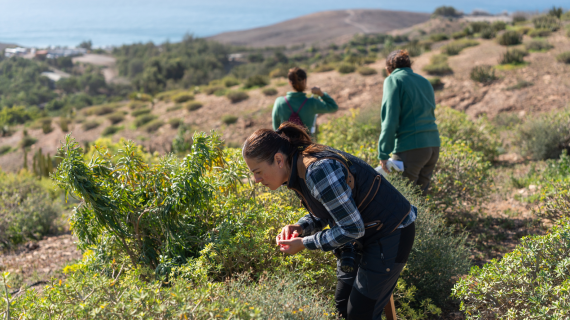
In 2023, the European Commission mandated the development of three targeted Species Action Plans to address pollinator decline. Developed by IUCN with specialist partners, the plans focus on Canarian Islands pollinators, teasel-plant bees and hoverflies specialised to veteran trees. 

A new online tracker now monitors implementation progress across countries and conservation actions. The initiative helps identify where progress is happening and where additional action is urgently needed. 

Meet the “Pollinator Champions” 

Behind every conservation plan are people making it happen. This World Bee Day, IUCN is spotlighting researchers, practitioners, community leaders and young conservationists helping translate pollinator conservation into action on the ground. 

The new Pollinator Champions campaign highlights local efforts ranging from habitat restoration and species monitoring to community engagement and pollinator-friendly land management. 

Young conservationists step up for pollinators across Europe 

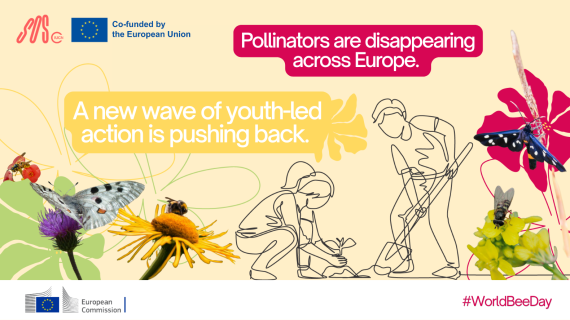
New cohort of youth-led projects launches through the European Fund for Youth Action on Pollinators 

A new cohort of youth-led projects is now underway through the European Fund for Youth Action on Pollinators, co-funded by the European Union and implemented by IUCN Save Our Species. 

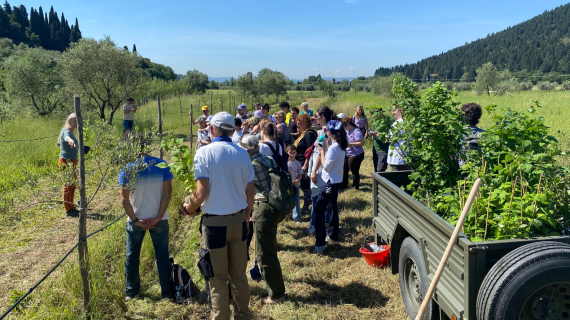
Projects range from DNA-based pollinator monitoring in Croatia and Italy, to urban refuge design in Spain, hoverfly conservation in Austria and forest pollinator research in Italy. Several initiatives also directly contribute to Red List assessments and EU Species Action Plans for threatened pollinators. 

The common thread across the portfolio is practical action: projects designed to be tested, adapted and replicated in real landscapes and communities. 

Read the full story

Also happening: Young Europeans call for stronger pollinator action 

The recently concluded Young Citizens’ Assembly on Pollinators brought together around 100 young Europeans over nine months to discuss pollinator decline and biodiversity policy. 

Participants called for stronger habitat restoration, reduced pesticide impacts, better implementation of environmental policies and the creation of a permanent Young Citizens’ Assembly on Biodiversity. 

What now?

Pollinator decline remains a huge challenge. But many of the most effective responses are practical, scalable and already being tested across landscapes and communities worldwide. 

A few areas where we can accelerate progress: 

  • 🌱 Restore native flowering habitats in urban and agricultural landscapes 
  • 🚫 Reduce pesticide use and promote pollinator-friendly farming practices 
  • 📊 Support species monitoring, Red List assessments and citizen science initiatives 
  • 🏙️ Integrate pollinator-friendly design into urban planning and green infrastructure 
  • 📣 Share successful local initiatives so they can be adapted and replicated elsewhere 
  • 💚 Support conservation initiatives helping protect pollinators on the ground, including through programmes such as IUCN Save Our Species  

This World Bee Day, one thing is becoming increasingly clear: pollinator conservation is no longer a niche conservation issue. It is becoming central to conversations about food security, biodiversity, climate resilience and sustainable land management worldwide. Sustaining that momentum will require continued collaboration, innovation and support for the people and organisations driving conservation action on the ground. 


About us

IUCN’s Species Conservation Action team supports science-based conservation to address the main threats to biodiversity and save species from extinction.

We work with experts around the world to design initiatives, such as IUCN Save Our Species and the Integrated Tiger Habitat Conservation Programme, which maximise conservation impacts for species, habitats and people.

Donate now
 

Image credits

  • Cover image: © Francesca Martelli, © BIODEV2030 Ethiopia, © Mercedes Ciccale Smit
  • © BIODEV2030 Kenya
  • © GERP Madagascar
  • © Luis Garcia Solsol
  • © WWF India
  • © Angelica Maria Hernandez Jarguin
  • © Anna Frosini
You are receiving this email because you have subscribed to A Call from the Wild, the newsletter of IUCN Save Our Species and the Integrated Tiger Habitat Conservation Programme. You can unsubscribe from this newsletter at any time:
 
Unsubscribe  |  Forward this email

Copyright © 2026 IUCN Species Conservation Action Unit, Centre for Conservation Action. All rights reserved. Rue Mauverney 28, 1196, Gland, Switzerland.