View in your browser

 Facebook  X / Twitter  Web  Linkedin  Instagram
A Call from the Wild
Five key takeaways
for conservation action
from the IUCN Congress 2025

 
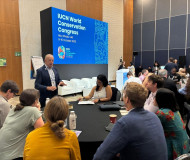
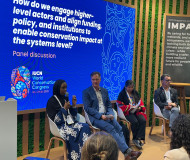
Under the banner “Powering Transformative Conservation,” the IUCN World Conservation Congress (9–15 October, Abu Dhabi) united governments, scientists, Indigenous leaders, and conservation practitioners from around the world to accelerate solutions for biodiversity, climate, and people.
 

At the heart of the discussions was one common goal: turning biodiversity ambition into measurable action for species, habitat, and people. Across pavilions, plenaries, and hands-on learning sessions, one message resonated clearly: conservation action works, and scaling it equitably is the key to transformative change. 

Here are five takeaways to shape the next era of nature conservation. 

 
Explore more
 

1. IUCN Members unite under new guiding vision for nature 

One of the defining moments of the Congress was the formal adoption by IUCN Members of a new 20-year strategic vision, Unite for Nature on the Path to 2045, together with the IUCN Programme 2026–2029, the first implementation plan under this vision. 

This milestone sets the overarching direction for IUCN and positions species conservation at the heart of global efforts to tackle biodiversity loss and climate change. Its core pillars include: 

  • Scaling inclusive conservation across land, freshwater, and marine systems. 
  • Mainstreaming nature within transformative sectors, from food systems to the blue economy. 
  • Embedding equity and rights-based approaches, especially for Indigenous Peoples and Local Communities (IPLCs), women, and youth. 
  • Linking ecological outcomes with social justice and human wellbeing. 

Complementing this, the Abu Dhabi Call to Action, welcomed by acclamation during the 9th sitting of the Members’ Assembly, set out a focused set of key priorities that reflect the most pressing global challenges and opportunities discussed at Congress. It calls on the global community, under IUCN’s leadership, to accelerate urgent and practical action across five key areas: reaffirming nature as the foundation of wellbeing, strengthening multilateralism, ensuring justice and inclusion, advancing knowledge and innovation, and scaling up resources for nature and climate action. It sets a collective vision for transformative change – uniting governments, communities, and sectors to achieve a just, resilient, and nature-positive future for people and the planet. 

Developed through a Union-wide consultation, the Call to Action reflects IUCN Members’ collective determination to translate global ambition into measurable outcomes. Together, the Unite for Nature vision, IUCN Programme 2026–2029, and Abu Dhabi Call to Action chart a united course for transformative conservation over the next two decades. 


2. Equity, rights, and local stewardship are foundational, not optional 

One of the strongest threads at the Congress was this: conservation that ignores rights, equity, and local stewardship will fail. 

  • During sessions like “Strengthening indigenous and local leadership in tiger conservation”, community leaders showed how recognising land rights, traditional knowledge, and cultural values is the foundation for coexistence with wildlife. 
  • The World Summit of Indigenous Peoples and Nature, convened in parallel with the Congress, underscored that Indigenous Peoples and Local Communities (IPLCs) must co-craft conservation decisions, not just be consulted. 
  • The “People of the Oceans” breakthrough initiative recognised Indigenous ocean governance and elevated ocean peoples’ voices within IUCN governance. 
  • Rangers and frontline conservationists were also celebrated through the International Ranger Awards, honouring 13 individuals and teams for their extraordinary courage and commitment. 
 

3. Strategic small grants deliver powerful conservation results  

Released during Congress week, the new Fondation Segré Conservation Action Fund: Key results and highlights 2021–2025 report celebrated years of partnership between IUCN Save Our Species and Fondation Segré to protect overlooked and threatened species around the world. 

The report showcases how small, strategic grants can achieve remarkable conservation outcomes, supporting both biodiversity and local livelihoods. Through a combination of research and action grants, the Fund empowers local organisations to implement species conservation projects across 41 countries, helping to restore habitats, strengthen community stewardship, and inform national biodiversity strategies. 

From conserving freshwater stingrays in Thailand to protecting the Critically Endangered dark sitana lizard (Sitana fusca) in Nepal, each project demonstrates how locally led action drives measurable results for both biodiversity and livelihoods. 

Read the full story and download the report
 

4. Robust data, collaboration, and accountability are the engines of progress 

If conservation is to move from aspiration to impact, it needs robust data, strong partnerships, and mechanisms for tracking results. At Congress, these three pillars came together across sessions, publications, and new digital tools designed to scale impact globally. 

  • The latest IUCN Red List of Threatened Species™ update revealed that over a quarter of assessed species face high extinction risk, yet also showed that conservation works: without it, extinction rates for birds and mammals would have been up to four times higher over the past 30 years. 
  • This message of hope was echoed in the latest IUCN Green Status of Species assessment for tigers, which found that while global populations remain Critically Depleted, successful conservation in countries such as Nepal, India, and Bhutan demonstrates that recovery is possible when habitats are protected, communities are engaged, and transboundary collaboration is strong. The Integrated Tiger Habitat Conservation Programme (ITHCP) exemplifies this success, supporting community-led anti-poaching efforts, habitat restoration, and cross-border cooperation that have helped stabilise and increase tiger numbers across Asia’s key landscapes. 
  • At the same time, new data reveal growing concern for Europe’s pollinators. Nearly 100 additional wild bee species are now threatened, bringing the total to one in five species of bees and bumblebees at risk of extinction. These alarming figures underscored the urgency of implementing concrete conservation measures, such as those advanced under the EU Pollinators Initiative and the European Fund for Youth Action on Pollinators, showcased in sessions at the Congress as key examples of data-driven, community-led action in Europe. 
  • The publication The Nature of Success: Stories of Impact from IUCN’s Collaboration with Business demonstrated how partnerships with the private sector can deliver measurable outcomes for nature, from restoring wetlands to reviving Europe’s sturgeon populations.  

Together, these developments underscore that progress is possible when data, partnerships, and policy align. 

Explore more developments
 

5. Storytelling as a force for change

At the BBC Media Action Pavilion, the BBC and IUCN teased the global storytelling series Living Legacy, narrated by the late Dr Jane Goodall. The series celebrates communities protecting nature and building resilience, offering a hopeful lens on coexistence between people and the planet. 

A story from IUCN’s Integrated Tiger Habitat Conservation Programme (ITHCP) will feature in the series’ next release in November 2025, showcasing community-driven tiger conservation in Nepal. 


A collective call to action 

From inclusive funding and digital tools to science, storytelling, and community empowerment, the IUCN Congress reaffirmed a simple truth: transformative conservation is both possible and within reach. The Abu Dhabi Call to Action reminded the world that achieving a just, resilient, and nature-positive future requires unity, across nations, communities, and generations, under a shared purpose of One Nature, One Humanity, One Future. 

The next challenge lies in maintaining this momentum, ensuring that every commitment made in Abu Dhabi translates into sustained action for species and ecosystems on the ground. With the IUCN Programme 2026–2029 now in motion, the path ahead calls for collaboration, accountability, and the courage to act at scale. 

Explore more highlights on our Congress Hub
 

About us

IUCN’s Species Conservation Action team supports science-based conservation to address the main threats to biodiversity and save species from extinction.

We work with experts around the world to design initiatives, such as IUCN Save Our Species and the Integrated Tiger Habitat Conservation Programme, which maximise conservation impacts for species, habitats and people.


International Union for Conservation of Nature (IUCN) © 2025

You have subscribed to the Call from the Wild Newsletter aims to keep IUCN members, partners and supporters up-to-date with the work of IUCN’s Species Conservation Action Team. You can unsubscribe from this newsletter at any time.

 
Unsubscribe  |  Forward this email