View in your browser
ECOSYSTEM INSIDER

Ecosystem Insider brings you news from the IUCN Commission on Ecosystem Management

March 2025 Edition
Dear CEM members,

We are glad to share with you the first trimestral issue of 2025 of the Ecosystem Insider Newsletter by the IUCN Commission on Ecosystem Management.
CEM Highlights
A step closer to the updated IUCN Global NbS StandardTM

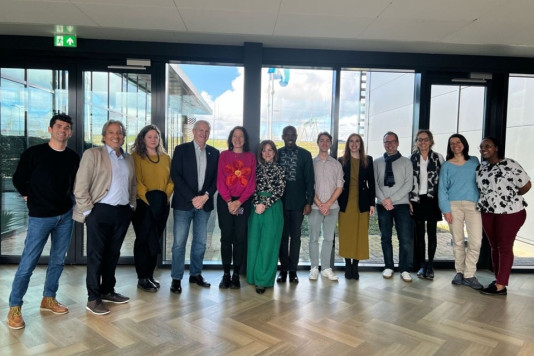
Following a two-months process of public consultation and experts’ interviews, a Core Working Group met in Breukelen, the Netherlands, to review all the comments gathered for the update of the Global Standard for Nature-based Solutions. The Group included Angela Andrade (CEM and ISC Chair), Stewart Magginis (Poner su cargo) Emmanuelle Cohen-Shacham and Edna Cabecinha (NbS TG Lead and co-Lead); Manuel Pulvar Vidal (CCC Chair), Mathias Bertram, Jennifer Lucey and Chrissy Grant from the International Standard Committee; Fabien Kufel and Marion Poncet from the IUCN French Committee; and Alessandra Pome and Pedro Fernandez, who conducted the experts’ interviews.

We thank all CEM members who have provided feedback through interviews and by filling in surveys. The Global Standard for NbS update is planned to be launched at the upcoming World Conservation Congress.

 
Discussing the future of the Red List of Ecosystems

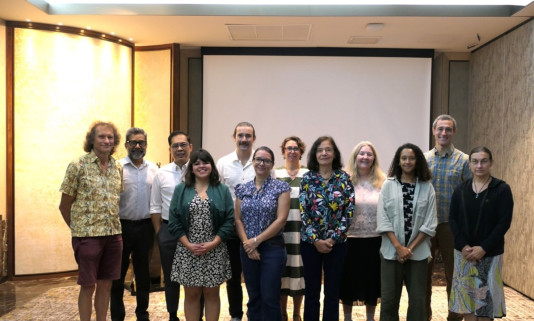
In February, the members of the Steering Committee and members of the RLE Partnership for the IUCN Red List of Ecosystems (RLE) met in-person for the first time in Bangkok, Thailand to discuss the strategic plan of the LRE 2026-2029 period, aligned with the new IUCN program, as well as the main actions to be developed during the upcoming intersessional period. The RLE is becoming increasingly relevant, as it was officially included as an indicator of Target A and several other indicators of the Global Biodiversity Monitoring Framework Kunming-Montreal, which was recently adopted during the final session of COP16 in Rome. Additionally, during this meeting, the partnership promoting the implementation of the RLE, signed in 2019, was reviewed. This partnership serves as an important platform for joint work among several organizations over the next 5 years. The renewal of this partnership is vital to support several of the goals of the CBD's Global Monitoring Framework.

 
The CEM 2024 Annual Report is out

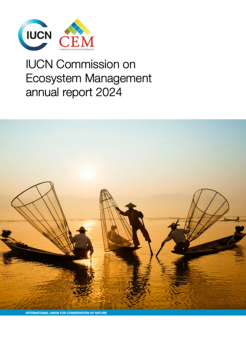
The CEM 2024 Annual Report with the Commission’s main achievements has been published. This report is a collective effort of all the Commission members who have worked endlessly during the past year and a recognition to all the group leads and regional chairs for their dedication and leadership. The report highlights the main results, projects, events and initiatives that members have developed and participated in over the past year.


You can view the full report here.

CEM Dialogues
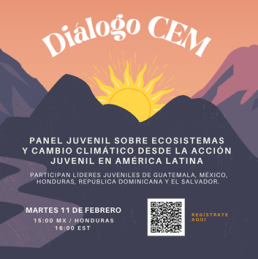
CEM Dialogue (in Spanish): Panel Juvenil sobre Ecosistemas y Cambio Climático desde la Acción Juvenil en América Latina

On February 11th, the CEM Young Professional Network from Mexico, Central America and the Caribbean, hosted a webinar on the role of youth in ecosystems and climate change in Latin America. The session included a panel of several young professionals from Guatemala, Mexico, Honduras, Salvador and Dominican Republic, who shared their experiences working in the field, in marine and terrestrial ecosystems, and how only through fostering collaboration, is it possible to advance in impactful conservation action.

                                   The full webinar (in Spanish) can be viewed here.

 
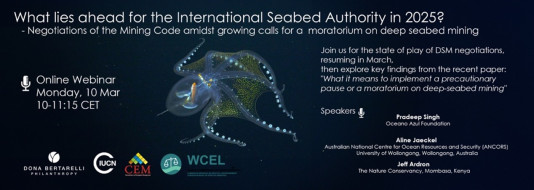
What lies ahead? Mining Code negotiations amid growing calls for a moratorium on deep seabed mining

The IUCN CEM Deep Sea Mining Specialist Group hosted a special CEM Dialogue in collaboration with the IUCN World Commission on Environmental Law and the IUCN Oceans Team on March 10th. The webinar, titled What lies ahead? Mining Code negotiations amid growing calls for a moratorium on deep seabed mining included presentations by CEM Deep Sea Mining Specialist Group Lead, Pradeep Singh; Aline Jaeckel (Associate Professor at the Australian National Centre for Ocean Resources and Security (ANCORS), and Jeff Ardron (Africa Oceans Director for The Nature Conservancy, Mombasa, Kenya), who discussed the state of play of DSM negotiations which resumed with the ISA Council in March, before exploring the key findings from the recent paper entitled A Pause or Moratorium for Deep Seabed Mining in the Area? The Legal Basis, Potential Pathways, and Possible Policy Implications which focuses on what it means to implement a precautionary pause or a moratorium on deep-seabed mining.

                                               Watch the full webinar here.


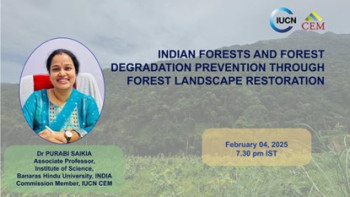
On February 4th, the South Asia Region hosted a CEM Dialogue on Indian Forests and Forest Degradation Prevention Through Forest Landscape Restoration, where they discussed the role of forests as the primary repositories of terrestrial biodiversity, accounting for approximately 80% of such biodiversity. In India, they constitute the second-largest land-use after agriculture. More than 40% of the Indian forests are degraded and under-stocked and 70% have lost their natural regeneration potential. The continuous degradation of natural forests leads to drought, flood, disturbance in nutrient cycling, increasing atmospheric CO2, soil erosion, loss of biodiversity, etc. The webinar shared evidence of case studies on how a positive forest cover change in recent years became possible because of better conservation and management interventions by the Indian government through afforestation, community participation for protection of plantation areas, and expansions of trees outside natural forests.

                                                      Watch the full webinar here.

Past Events
Nature-based Solutions, biodiversity, and climate change in Hong Kong

An important group working on NbS, along with the Hong Kong Institute of Landscape Architects organized the International Climate and Biodiversity Conference: Nature-based Solutions in Action, which was held March 6-7, 2025, in collaboration with the International Federation of Landscape Architects Asia-Pacific and the Hong Kong Green Building Council. Dr. Liette Vasseur (CEM Deputy Chair) gave a presentation on the IUCN Global Standard for NbS. Several topics were covered including the importance of governance, youth engagement, importance of urban nature, the updating the Hong Kong Biodiversity Strategy and Action Plan, financing NbS, corporate and community involvement, and restoration.

 
Ecosystem Governance: Different Dimensions of Ecosystem Governance

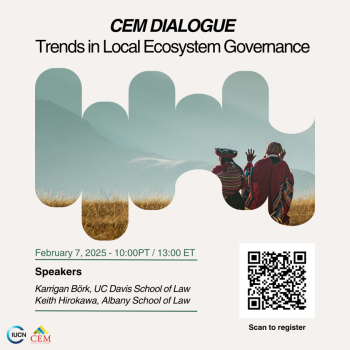
The CEM Ecosystem Governance Thematic Group (EGTG) recently launched a series of dialogues on diverse topics related to the Group's theme. Based on recent research, the dialogues target both the spread of up-to-date information for all the members while fostering discussions with the panelists and among attendees. Two main topics involved the review of the IUCN's EG principles and the pros and cons of an EG on a local level. It was also announced during the Principles webinar the publication of a case-studies book with the urban and rural topic (to be first released in the upcoming WCC), and to which some selected EGTG specialists kindly served as chapter peer-reviewers. 

Upcoming Events
11th World Conference on Ecological Restoration 

The 11th World Conference on Ecological Restoration (SER2025), to be held in Denver, Colorado from 30 September to 4 October 2025, will bring together restoration practitioners, researchers, policymakers, and community leaders from around the globe. The conference provides a unique networking opportunity, fostering global collaboration between participants. Join professionals from academia, NGOs, businesses, government, and indigenous communities at this premier 2025 event to shape the future of restoration globally—register at the following link.

 
International Conference on Glaciers’ Preservation 

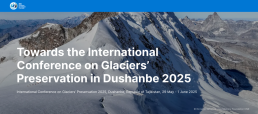
2025 has been declared the year of the Glaciers by the United Nations, and as part of it, the International Conference on Glaciers’ Preservation, to be held in Dushanbe, Republic of Tajikistan, from May 29 – June 1st, will serve as a platform to advance global efforts in climate adaptation and resilience, with a specific focus on addressing glacial melting, to foster greater awareness and knowledge exchange, enhance technical capacities, and promote the dissemination of best practices. The conference will emphasize climate-responsive and transformative solutions, adopting an integrated and transboundary approach to mitigate the adverse impacts of glacial melting on water security, food security, and community resilience.

                                     For more information, visit the conference website.

 
IMEC Webinar Series: The BFIS tool: Screening for biodiversity impacts of energy sector operations

The CEM Impact Mitigation and Ecological Compensation will be hosting their first webinar for 2025 titled The BFIS tool: Screening for biodiversity impacts of energy sector operations. The webinar will focus on the Biodiversity Footprint Impact from Sites (BFIS) tool, developed by The Biodiversity Consultancy in collaboration with TotalEnergies. The session will cover the rationale behind the development of the tool, the role it is designed to fill for companies within the energy sector, and an overview of the methodology and scope. There will also be a brief case study of its application to a particular site type, to gain a better understanding of how the tool works in practice.

The webinar will be held on April 10th at 8:00 (GMT) / 10:00 (CEST) / 8:00 (AEST)

                                                  Register to the event here.

 
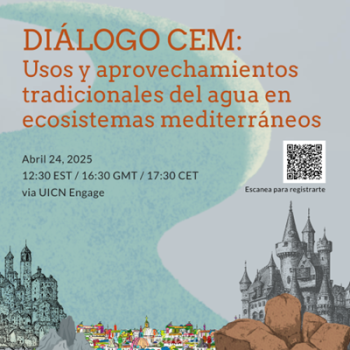
CEM Dialogue (in Spanish): Usos y Aprovechamientos tradicionales del agua en ecosistemas mediterráneos

On April 24th, the Mediterranean Ecosystems Specialist Group will host a CEM Dialogue in Spanish on traditional water uses in Mediterranean Ecosystems. The guest speakers will share examples of ancient uses of water, its structures and characteristics, and how these techniques and knowledge can help us manage this increasingly scarce and in-demand resource today. Go the link here to register.

 
Nature Positive working group

The Nature Positive Working Group is holding a virtual workshop on “nature positive and additional conservation actions” on April 3rd. Members of the Nature Positive working group will already have received a calendar invite, but for others who are interested, please contact Steve Edwards. The group has also developed a session proposal for the 2025 IUCN World Conservation Congress, focussed on nature positive and the mitigation hierarchy - thanks to Steve for leading this effort.

 
Eco-Disaster Risk Reduction Training programme

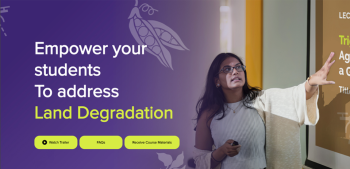
Triggering Change for land restoration through higher education: Building capacity by developing university curricula on land restoration is one key pillar of the G20 Global Land Initiative (G20 GLI) hosted at UNCCD. The innovative, transdisciplinary university course: “Trigger Change! Innovation in Sustainable Urban Land Restoration” aims to empower a generation of change-makers on land restoration and sustainable urban planning. The course will be launched in May 2025 and consists of 48hrs of teaching materials that will be made available to interested universities and extension programmes worldwide. The course is developed by contributors from universities worldwide, experts from practice and UN organisations, including members of IUCN commissions. It was also presented at the World Urban Forum and Biodiversity COP16.

                                                               Photo: G20Land.org

                                             Visit the link here for more information.

 
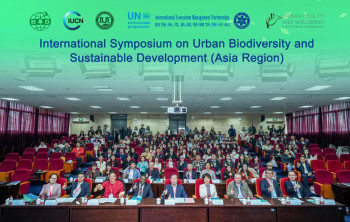
International Symposium on Urban Biodiversity and Sustainable Development, Xiamen, China

The International Symposium on Urban Biodiversity and Sustainable Development, held in Xiamen, China, on February 20-21, 2025, was organized by IUCN in collaboration with the Chinese Academy of Sciences and other partners. The event gathered 140 representatives from universities, research institutions, and organizations worldwide to address the growing threats of urban development to biodiversity. IUCN highlighted urban growth as a top threat to species, calling for the integration of Nature-Based Solutions (NbS), protection of Key Biodiversity Areas (KBAs), and expansion of urban green spaces. Experts discussed tools like the IUCN Global Standard for NbS and case studies from Japan and China on balancing urban development with ecological preservation. The symposium aimed to turn urban biodiversity challenges into actionable solutions and promote global collaboration for sustainable urban planning.

Other News
Global Partnerships for Peatlands

The IUCN UK Peatland Programme (IUCN UK PP), a CEM member organisation, has been working in partnership with the United Nations Environment Programme-led Global Peatlands Initiative (GPI) to raise awareness of peatlands and synthesise scientific evidence around key issues.

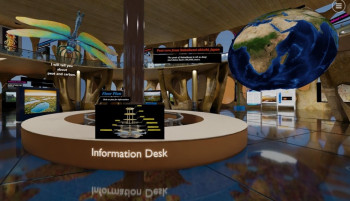
                                             Interior of the Virtual Peatlands Pavilion

The Virtual Peatlands Pavilion, a collaborative digital educational resource supported by IUCN UK PP and GPI, is embarking on a world tour to raise awareness of the global distribution and importance of peatlands. Showcasing the latest in peatland science, policy, art, practice and more, the Pavilion provides a low carbon and low-cost alternative to physical travel. At climate and conservation events across the world, audiences will be invited to explore the Pavilion and contribute content to this growing platform.

Find out more about the world tour, submit content and enter the Pavilion.

 
Multi-tool platform to promote use and adoption of the Standards of Practice to Guide Ecosystem Restoration for the UN Decade

CEM’s Ecosystem Restoration Thematic Group is partnering with UN FAO and the Society for Ecological Restoration to develop a multi-tool platform to support the use and adoption of the Standards of Practice to Guide Ecosystem Restoration for the UN Decade on Ecosystem Restoration (published in March, 2024). The platform will include three distinct tools: 1) a 6-lesson E-learning course; 2) a searchable navigation tool for unpacking the recommendations in the Standards; and 3) a decision-support and self-assessment tool. Beta versions will be launched in October 2025 at the Society for Ecological Restoration World Conference and the IUCN World Conservation Congress. For more information, or if you would like to engage expert review and consultation on these tools, please contact Cara Nelson, Restoration Thematic Group Lead.

 
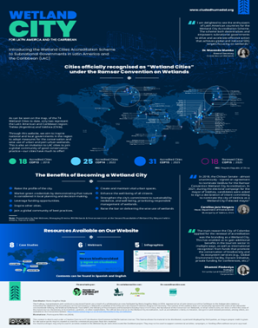
The Wetland City for Latin America and the Caribbean (LAC)

Members of the Independent Advisory Committee of the Wetland City Accreditation under the Convention on Wetlands have been able to launch the Wetland City for Latin America and the Caribbean (LAC) website in the frame of World Wetlands Day. Under the coordination of María Mejía, the website highlights the benefits of urban and peri-urban wetlands for people and biodiversity. It also introduces the Wetland City Accreditation scheme to subnational governments of Latin America and the Caribbean.

 
IUCN-CEM Wetland Specialist Group: Advancing Solutions for Methane Emissions

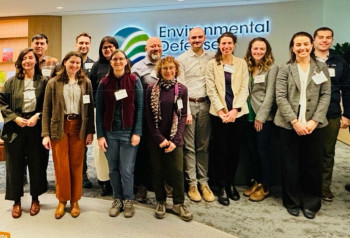
Dr. Tatiana Lobato de Magalhães, Chair of the IUCN-CEM Wetland Ecosystems Specialist Group, joined 18 distinguished scientists and practitioners at the Climate Smart Wetlands working group on March 5-6, 2025, in Washington, DC. Organized by the Environmental Defense Fund, the meeting aimed to enhance discussions and develop actionable solutions to address methane emissions from wetlands. This collaborative effort is a significant step towards promoting climate-smart strategies and improving the management of wetland ecosystems.

 
IUCN-CEM Wetland Specialist Group: Celebrating Dr. Tatiana Lobato de Magalhães' Achievements

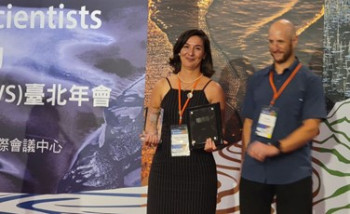
In November 2024, Dr. Tatiana Lobato de Magalhães, leader of the IUCN CEM Wetland Ecosystems Specialist Group, was honored with two prestigious awards at the Society of Wetland Scientists (SWS) annual meeting in Taipei, Taiwan. She received the International Fellow Award for her outstanding contributions to wetland science and the SWS Presidential Service Award in recognition of her exceptional service to the Society, particularly her leadership as co-chair of the international chapter since 2019. These accolades reflect Dr. Lobato de Magalhães’ dedication to advancing wetland science and global conservation efforts.

 
Empowering Communities, Restoring Mangroves: The Green Brigade Movement in Gujarat India

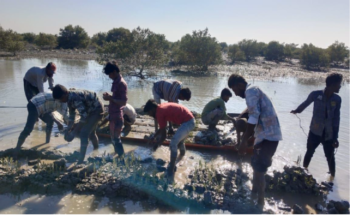
The Gujarat Institute of Desert Ecology (GUIDE) in Bhuj, India, has been conducting a community-based mangrove conservation program since 1995 along the Gujarat coastline. Mangroves play a vital role in coastal ecosystems, offering biodiversity and coastline protection, especially against the effects of climate change like storms and cyclones. The community-driven restoration approach has not only created a natural barrier to mitigate climate impacts but also boosted local economies by increasing fish and crab catches. Additionally, the efforts have enhanced local biodiversity, including the return of heronry birds. This approach addresses both ecological and socio-economic challenges, improving the environment and the community's quality of life.

 
Commemorating the 2025 World Wildlife Day by Investing in Our Youth Members Through Education For Sustainable Biodiversity Conservation

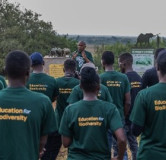
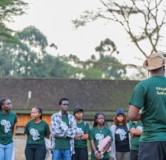
The African Fund for Endangered Wildlife Kenya – Giraffe Centre hosted a one-day field trip to Nairobi National Park for 45 students from various Kenyan universities, including the University of Nairobi and Multimedia University. The trip, part of the 2025 World Wildlife Day celebrations under the theme "Wildlife Finance: Investing in People and Planet," aimed to connect youth to nature, promote education on sustainability and biodiversity, and inspire active participation in wildlife conservation. Students from diverse disciplines shared their experiences and discussed solutions to challenges like biodiversity loss and unsustainable resource use. They also had the opportunity to learn from mentors in wildlife conservation, media advocacy, and environmental careers. The event, supported by AFEW Kenya and the TonyWild Foundation, aligned with global conservation goals like the UN Decade for Ecosystem Restoration and the Convention on Biological Diversity.

Photos: Courtesy of Anthony Ochieng (TonyWild).

Latest Publications
Impact Assessment Frameworks for Nature-Based Climate Solutions: A Review of Contemporary Approaches

This new paper provides a comparative analysis of ecological impact assessment (EcIA) guidance for the design and approval stages of carbon sequestration and emission reduction projects. The results show considerable variation in the scope of assessment components including the level of attention to ecosystem services and areas of high conservation value that may require specific protections. There is also a general lack of guidance on the inclusion of indirect and supply chain effects despite their relevance to ecological impacts. Takeaway messages include a need to focus assessment and reporting on comparisons with recent baselines to identify the contributions of individual projects and enable adaptive management. Opportunities to align with the concepts of Nature-based Solutions and Nature-Positive are also identified and could be used to reimagine the role of EcIA in this direction. To read more, follow the link here.

 
Peatlands and Methane and Tracks and Roads on Peatlands

These two papers summarise the science around methane emissions from temperate peatlands, explaining the natural processes which lead to methane production and comparing greenhouse gas emissions from intact, drained and rewetted peatlands. ‘Tracks and Roads on Peatlands’ synthesises the latest research on the impacts of linear developments on peatlands in the northern hemisphere, identifying knowledge gaps and providing recommendations for policy makers and the research community. Find both publications on the ‘Briefings’ page of IUCN UK PP’s website.

 
Nature-based solutions as urban adaptation to climate risk: Framework for economic evaluation as decision support tool

A recent paper published by Sahay Samraj (2025), develops an evaluation framework to measure the effectiveness and economic validity of Nature-based solutions as an urban adaptation to climate risks to serve as a decision tool for informed decisions. Through a systematic review of peer-reviewed articles published between 2015 and 2023, the synthesis of the evidence a five-step framework, exclusively for economic evaluation of NBS as urban adaptation has been developed. Please access the full paper using the following link.

 
Ecologically Mediated Development: Promoting Biodiversity Conservation and Food Security

Hanuman Singh Jatav and colleagues recently published a book that addresses the critical need to balance biodiversity preservation with ensuring a nutritious and ample food supply for the growing global population. The book emphasizes how conserving biodiversity enhances agricultural resilience, promotes sustainable food production, and safeguards food security for present and future generations. Its book includes real-world case studies and examples from different regions to demonstrate successful initiatives and the impact of biodiversity conservation on local food systems. The full document is available here.

 
Cost-benefit analysis of urban nature-based Solutions: A systematic review of approaches and scales with a focus on benefit valuation

Alessia Chelli and Co-auteurs have recently published a paper on the Cost-Benefit analysis (CBA) of urban nature-based solutions. The new paper presents a systematic review of CBA studies on urban NBS, highlighting different approaches and providing insights to guide future research and practice. The findings show that NBS is economically advantageous in most analyzed cases, although assessments often fail to capture the full range of costs and benefits. The full paper is available here.

Registration for IUCN WCC is officially open!

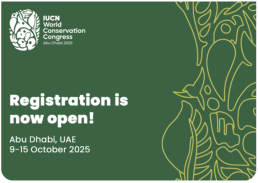
The registration for the IUCN World Conservation Congress 2025 is officially open. The WCC, held every 4 years, and to be hosted in Abu Dhabi this year, is the world’s largest conservation event where IUCN members, commission members, global leaders, indigenous organizations, and decision makers and civil society, come together to discuss and define the next global priorities. Visit the WCC website to register.

 
Newsletters


Subscribe to an IUCN Newsletter

International Union for Conservation of Nature (IUCN) © 2025

The CEM Newsletter aims to keep IUCN CEM members, IUCN staff, and the wider IUCN network up-to-date with ecosystem management news and announcements. 

Thank you for reading us and don’t forget to follow us on our social media channels

 Facebook  X / Twitter  Instagram

Unsubscribe  - By unsubscribing to this newsletter you are unsubscribing from all future IUCN announcements