View in your browser
Mapping equitable, effective paths to achieving 30x30

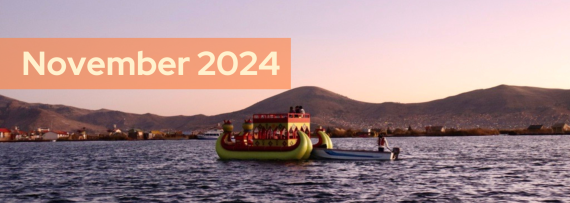
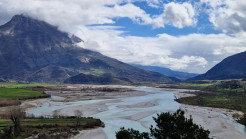
Lake Titicaca, Puno from the Peruvian side ©LOPEZ GUIJOSA Pablo Arturo, Communication Officer, ORMACC

Lake Titicaca is the largest freshwater lake in South America and the highest of the world's large lakes. Titicaca is one of less than twenty ancient lakes on earth, and is thought to be three million years old. Lake Titicaca sits 3810m above sea level and is situated between Peru to the west and Bolivia to the east. Peruvian part is located in Puno department, in Puno and Huancane provinces. Also under Peruvian legislation, part of Lake Titicaca is included in the National System of Protected Areas (SINANPE) as a national reserve (IUCN VI category). 

Want your photo featured? Read on below to find out how!

 
Governance Failure = Climate Catastrophe: How adopting the IUCN CEESP governance framework could have made a difference in preparedness and response

Emmanuel Nuesiri, Chair of the Natural Resource Governance Framework Working Group for CEESP, explains in this brief note how IUCN CEESP’s Natural Resource Governance Framework could be instrumental in addressing the systemic gaps that contributed to this tragedy and preventing similar disasters in the future.

Read more
IUCN participates in the 1st Regional Forum in the Congo Basin

Delivering a presentation on "Agroecology and Biodiversity Conservation" during the 1st Regional Forum on Agroecology in the Congo Basin was an honour for IUCN, represented by the West and Central Africa Regional Office. The event was initiated by a BIOPAMA grantee, SAILD, with whom IUCN implemented the "Project to optimise conservation of Deng Deng National Park by strengthening the capacities of local communities in agroecological practices in Cameroon."

Read more
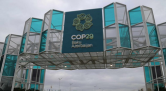
IIFB highlights traditional knowledge contributions to climate change mitigation at COP29

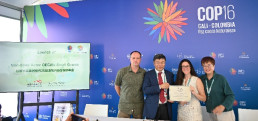
Co-chair of the IIFB, Lucy Mulenkei expressed, “the importance of Traditional Knowledge related to Biodiversity was discussed at the TRUA SUMMIT in Bogota, as well as the advocacy strategy for the work at COP16 where the Subsidiary Body on article 8J was adopted, and which was a great achievement for us all. Discussions on biodiversity are crucial and it is important to continue to find the relation with climate change in order to address this world crises."

Read more
Global Biodiversity Framework Fund: reflections and recommendations for advancing direct and equitable funding for Indigenous and community-led conservation

The GBFF has an opportunity for a pivotal alliance between the force of multilateralism and the leadership of Indigenous Peoples and Local Communities. However, such an alliance must be firmly grounded in recognition and respect for our rights, including our traditional knowledge systems shaped by many generations of practice and a peoples’ journey for millennia, resulting in genuine and actual transformational impacts at scale.

Read more
Finance deal an important but limited step towards common goals for a better future

As the UN climate talks closed in Baku, Azerbaijan, IUCN recognised the new collective quantified goal agreed on climate finance by Parties as an important – but limited – step forward in our common fight against climate change. IUCN welcomes the renewal of the mandate of the Facilitative Working Group (FWG) of the Local Communities and Indigenous Peoples Platform (LCIPP), as well as the successful adoption of their new 2025-2027 Baku Work Plan.

Read more
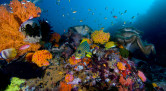
Over 40% of coral species face extinction – IUCN Red List at COP29

“This Global Coral Assessment raises the alarm for urgent collective action to stop the decline of coral reefs worldwide. The MSC Foundation is proud to partner with the IUCN Coral Red List team, who have done an exceptional job collecting the most reliable data to assess and report on the status of the world’s reef-building corals,” said Daniela Picco, Executive Director of the MSC Foundation. The protection of our biodiversity is not only vital for our well-being but crucial for our survival.

Read more
COP29: German Government seeks trailblazing international projects on biodiversity and climate action

The Federal Ministry for Economic Affairs and Climate Action (BMWK), the Federal Ministry for the Environment, Nature Conservation, Nuclear Safety and Consumer Protection (BMUV) and the Federal Foreign Office launched the 2024 Thematic Call of the International Climate Initiative (IKI) at the Climate Change Conference in Baku. 

Read more
IUCN and ODISEA partner for ocean conservation solutions in the Western Indian Ocean

IUCN will be partnering with the ODISEA expedition to explore and protect biodiversity in the Western Indian Ocean, IUCN’s Eastern and Southern Africa Regional Office announced at the COP29 in Baku. The joint work is aimed at strengthening the Great Blue Wall – a network of conserved and restored ecosystems that shelter communities.

Read more
BIOPAMA supports special online training on Protected Areas Management in Africa

BIOPAMA supported forty-one grantees in Eastern and Southern Africa Region and three programme team members to undertake a virtual course for conservationists entitled Strategies for Effective Protected Areas Management in Africa, delivered by conservation economics experts Conservation Strategy Fund (CSF).

Read more
The path to protect 30x30

We're committed to supporting nations around the world to achieve Target 3 of the Kunming-Montreal Global Biodiversity Framework, and with it, to conserve 30% of the world's ecosystems by 2030.

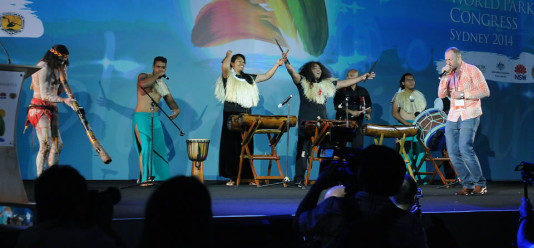
The Legacy of Sydney: Reflections on 10 Years After the 6th World Parks Congress and ‘The Promise of Sydney’

A decade has passed since the 6th IUCN World Parks Congress convened in Sydney, Australia, in November 2014. This Congress united conservationists, environmental donors, policymakers, Indigenous leaders, businesses, and key global stakeholders to enhance the status and impact of protected and conserved areas worldwide. The outcomes were encapsulated in the Promise of Sydney, a comprehensive set of commitments aimed at achieving biodiversity conservation for both people and nature. 

Read more
Global OECMs Practice: Insights from China and International Case Studies Contribute to Common Pathways for Definition

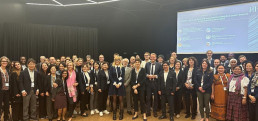
China's existing protected areas (including national parks, nature reserves, and nature parks) still have insufficient representation in the conservation of ecosystems and species, and OECMs, with their flexible and diverse governance structures, are expected to play an active role in filling this gap and providing new opportunities for recognising the contributions of Indigenous peoples and local communities in conservation work. Prof. Lu analysed the policy gaps and opportunities for OECMs in China and introduced the actions related to OECMs carried out by Chinese civil society, as well as the preliminary OECM standards drafted by the China OECM expert group. She shared the results of the OECM potential case collection initiative (hereinafter, the initiative) in China. This case collection was the first attempt to collect potential OECM cases in China, collecting a total of 90 cases.

Read more
“30x30” Financing Successful, Effective Area-Based Conservation at Scale

For years, countries and organisations like IUCN have advocated globally to secure commitment to this ambitious 30x30 target, which aims to protect 30% of the world’s land and oceans by 2030. While the percentage is significant, the focus is on inclusivity—expanding participation beyond traditional conservationists to involve a wide array of stakeholders. The goal is not only to increase the number of protected areas but also to enhance their effectiveness by fostering engagement and providing resources and recognition to diverse groups. The 30x30 target aims to bring together civil society, private sector actors, local communities, entrepreneurs, businesses, governments, and international organisations. By connecting resources with commitment, these efforts seek to manage funding effectively, expand community engagement, and strengthen existing protected areas. 

Read more
What counts? - Ensuring effective conservation

Through the IUCN Green List Standard, the global benchmark for Protected and Conserved Areas governance and management, we are working to ensure that 30x30 means real and effective achievement of conservation goals.

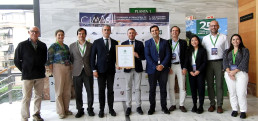
IUCN and Huawei Expand Spain Tech4Nature Projects and Celebrate Renewal of Sierra Nevada Green List Status at CIMAS II

At CIMAS II, Huawei and IUCN presented the achievements and next steps of the Tech4Nature Phase I project in Spain, which assessed requirements for balancing recreation and nature conservation in four protected areas: Sierra Nevada National Park, Ordesa y Monte Perdido, and Sierra de Guadarrama, and the Natural Park of Sant Llorenç del Munt i l'Obac. In Sant Llorenç del Munt i l'Obac Natural Park, a solution comprising cameras, GPS receivers, cloud storage, and AI was deployed to monitor the impact of visitors on local fauna, in particular the factors affecting the reproductive success and mobility of Bonelli's eagles. Phase II of the Tech4Nature project will continue to improve conservation and visitor management through digital solutions, enhance data analysis in protected areas, and explore outdoor navigation applications to improve visitor-wildlife interaction.

Read more
IUCN and Airbus Foundation initiative in Brazil shows potential of satellites to track land restoration efforts

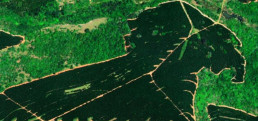
As part of a project launched in 2022 and supported by the Airbus Foundation, IUCN has been able to access satellite imagery and use artificial intelligence to assess the state of forest restoration efforts in São Paulo, Brazil. And now that the initial project has proven a success, IUCN is hoping to expand it – and it could serve as a model for further restoration initiatives across the world.  In 2011, IUCN partnered with the German Government to launch the Bonn Challenge, a global goal to restore 350 million hectares of degraded and deforested landscapes by 2030. IUCN has also partnered with Huawei to create the Tech4Nature initiative to further the conservation of protected areas, and just last year, IUCN partnered with the Allen Institute for AI to equip governmental and non-governmental organisations with advanced artificial intelligence technology to help monitor marine protected areas.

Read more
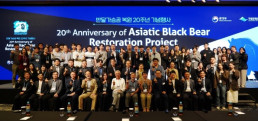
20th Anniversary of the Asiatic Black Bear Restoration: 'Coexistence: Walking Together with Nature and People'

The Ministry of Environment (led by Minister Kim Wan-seop) and the Korea National Park Service (led by Chairman Song Hyung-geun) hosted a 20th-anniversary commemoration event and academic symposium under the theme “20 Years of Coexistence in Asiatic Black Bear Restoration: Harmony of Humans and Nature” from October 30 to November 1 in Seoul and the Jirisan National Park area. Jirisan National Park was added to the Green List during the Pilot Phase in 2014. Since the successful implementation of the project to restore Asiatic Black Bears in Mt. Jirisan, Special Protection Zones (SPZs) have been expanded within the national park. These zones now cover 19.89 km², accounting for 40.5% of the entire Jirisan National Park (483 km²). In 2021, the Green List certification for Jirisan Park was renewed.

Read more
RESEX Soure Leading Innovative Management and Traditional Knowledge to Combat Threatened Biodiversity

The Soure Marine Extractive Reserve (RESEX Soure) became the first Brazilian Protected area to enter the IUCN Green List. Located in Soure, on Marajó Island, Pará, the Reserve was created in 2001 on the demand of the local communities, as the area’s biodiversity was threatened with the increase of predatory fishing activities coming from fishers from other municipalities. The Reserve stands out for its co-management model, shared between ICMBio and ASSUREMAS, an association of users and beneficiaries of the area. It has a strong deliberative council, with 14 other associations of local communities, NGO’s, universities and government bodies, that alongside ICMBio have been implementing ground-breaking participatory management activities.

Read more
Who counts? - People at the centre of conservation

As important as 'what counts', is 'who counts'. We are working to put people at the centre of conservation through supporting Indigenous peoples and local communities to lead and benefit from 30x30.

 
Voices of Change - Ivorian office of Parks and Reserves

Kone Aristide highlights that the inclusion of Tai National Park on the IUCN Green List has significantly improved the governance of the protected area. This recognition has also enhanced the livelihoods of local communities and bolstered support for regional development. The Ivorian Office of Parks and Reserves utilised their BIOPAMA grant to empower local communities within the country's protected areas, foster community interactions, and strengthen the capacities of traditional leaders.

Watch the video
Holocene Hip: Retro Nature Conservation and its Applications

Our stories, lives and art are neatly fitted into one new and brief section of the Holecene. However, shortly after the end of World War Two, this orderly classification is proposed to have shifted again. The increasingly complex web of human activity since the industrial revolution has yielded unprecedented changes to our relationship with the planet, and the age we live in. 

Read more
We need the trees that give us life 

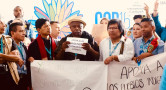
Chief Raoni Metuktire, often known simply as ‘Raoni’, is the leader of Brazil’s Kayapo people and an international icon of the fight to save the Amazon and its Indigenous cultures. Now in his nineties, Raoni has spent decades campaigning for the rights of Indigenous people and raising awareness of the destruction of the forest that supports them. 

Read more
COP16: Advancing Indigenous Leadership and Inclusive Conservation

The Democratic Republic of Congo(DRC) is home to vast and diverse ecosystems, including the world’s second largest rainforest. This rich biodiversity is not only a global treasure, but also a vital resource for the IPLCs who have stewarded these lands for generations. In the DRC, ANAPAC is a key player in strengthening, securing and enhancing these conserved areas.

Read more
Stewards of the Vanua, the Land, Sea and Sky: A Pacific Journey towards Conservation, Spirituality, and Justice

"In Pacific cultures, spirituality is intricately linked to the environment, with land, water, and the natural world seen as sacred gifts. Conservation is not just a scientific or economic issue, but a ‘spiritual responsibility’ for many Indigenous communities. It was empowering to see Indigenous voices recognized as key actors, rather than as passive beneficiaries", says Daphney Kiki, the CEESP Young Professional Focal Point for Oceania.

Read more
Advancing Indigenous leadership in Mi'kma'ki, Turtle Island
Unama’ki Institute of Natural Resources (UINR) has played a major role in advancing Mi’kmaq leadership in natural resource management and seeking to navigate reconciliation processes in Canada. Two primary aspects of UINR’s work are the Indigenous Protected and Conserved Areas (IPCAs) and the Jiksitatulti’kw project. IPCAs are vital to the Mi’kmaq of Nova Scotia as they offer the Nation a leadership role in protecting and managing places, within our traditional territory, that are essential to the Nation’s culture and spirituality.
Read more
A youth-led policy initiative to understand and advance youth perspectives on justice, equity, rights and relationship with nature

The Young Professional group under the IUCN-CEESP Theme on Governance, Equity, and Rights (TGER) is bringing together youth-focused and policy-oriented perspectives from young leaders who are engaged in work associated with the environment including research and advocacy. Through creative and flexible ways (like art, poetry, visuals, maps), the project aims to provide a platform for young professionals to document and record our environmental and conservation journeys.

Read more
Finland: Linnunsuo Wetland: A Community-Led Revival of Finland’s ‘Marsh of Birds’

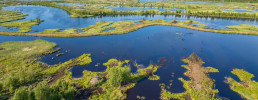
In North Karelia, Finland, a local fishing community has set out to revive a wetland that once bore the scars of peat mining. Now, Linnunsuo is more than a restored ecosystem: it has become a celebrated example of an Indigenous and Community Conserved Area (ICCA), demonstrating the power of collective action in preserving biodiversity and mitigating climate impacts.

Read more
Protected and conserved areas are critical natural climate solutions

An important area of overlap between the Convention on Biological Diversity and UNFCCC is their dependence on retaining and recovering the ecological integrity of ecosystems. This briefing
explains what natural ecosystems provide to climate control strategies, why protected and conserved
areas are important and how we can maximise their benefits.

Read more
Events and Getting Involved
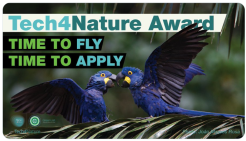
Tech4Nature Award: Scaling Conservation Impact with Innovative Technology

Submitting your Solution on the PANORAMA platform is your application for the Tech4Nature Award. Simply register on PANORAMA, follow the prominent "Apply for Tech4Nature Award" button, and submit your Solution by 15 December,2024

Participate now
Webinar- Conservation behaviour change: how to change human behaviour to help people and wildlife 

This webinar will explore the fundamentals of behaviour change, how an array of techniques can be used to change human behaviour and ultimately secure conservation outcomes.

11 December 2024 10:00 - 12:00 (CET)

Register here
UNCCD Conference of Parties 16th session | COP16

Upcoming is the  next UNCCD COP16 in Riyadh, Saudi Arabia – the largest-ever meeting of UNCCD’s 197 Parties, the first to be held in the Middle East region and the largest multilateral conference ever hosted by Saudi Arabia.

Get involved
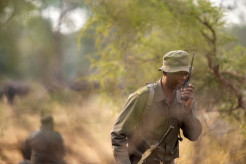
IUCN WCPA International Ranger Awards

The upcoming 2025 International Ranger Awards are open for nominations till 31st January 2025. Awardees will be announced during the 2025 IUCN World Conservation Congress in Abu Dhabi (October 9 – 15, 2025).

Nominate here
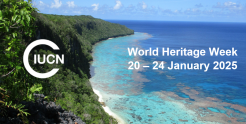
Save the date: IUCN World Heritage Week

IUCN is pleased to invite you to its first World Heritage Week, taking place online from 20 to 24 January 2025 , with several online discussions and speakers from all over the world. Learn more about the different themes and sign-up opportunities here.

Sign-up here
The European Commons, Territories of life and OECMs Conferences

How can rural commons be recognized for their innovations, traditions and contributions to sustainable development across Europe?  Join the Rural Commons Conference taking place in Switzerland on December 9-13. 

Learn more
Support IUCN

Your support will help IUCN, the largest conservation organisation in the world, continue with its work to promote conservation, World Heritage and sustainable development globally. Donations to IUCN-US may be tax-deductible in the United States.

Donate here
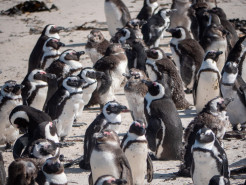
Feature your conservation photo!

Tell our readership of +11,000 conservationists about a story that matters to you. Send us your photo, a 50-word caption and the photo credit, with 'Feature My Photo' in the subject line, to have it featured in one of our upcoming newsletters.

Send your submission to namrata.dentan@iucn.org

Donate
Help us keep nature alive

Since its establishment in 1948, IUCN has become the global authority on the status of the natural world and the measures needed to safeguard it. IUCN’s new legacy gift options will help ensure IUCN keeps playing this essential role for years to come.

Read more

Learn More

Websites

IUCN Global Protected Areas Programme
IUCN World Heritage Programme
IUCN World Commission on Protected Areas
IUCN Program on African Protected Areas and Conservation
BIOPAMA, From Knowledge to Action for a Protected Planet
PANORAMA, Solutions for a Healthy Planet
IUCN Green List
LIFE4BEST
BEST2.0+
MOOC-Conservation
Act30

Tech4Nature

BestLife2030

Social media TAGS:

#IUCNGreenList - #PanoramaSolutions - #WorldHeritage - #BIOPAMA - #act30 - #Tech4Nature - #BestLife2030

Facebook:

Protected Areas
Program on African Protected Areas and Conservation
Protected Area Climate Change
Cultural and Spiritual Values of Protected Areas
Freshwater Protected Areas
Marine Protected Areas
#NatureForAll
PA and Conservation Learning News
Tourism and Protected Areas
Young Protected Area Leaders

Subscribe to:

Protecting the Planet Newsletter, other Commission Newsletters, the World Congress Newsletter, and other IUCN Newsletters 


International Union for Conservation of Nature (IUCN) © 2022

The monthly Protecting the Planet Newsletter aims to keep IUCN WCPA members, IUCN staff, and the wider IUCN network up-to-date with protected area news and announcements.

Unsubscribe - By unsubscribing to this newsletter you are unsubscribing from all future IUCN announcements

 Facebook  X / Twitter  Linkedin  Instagram