Unsubscribe
View in your browser

Dear Readers,

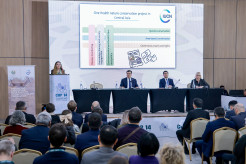
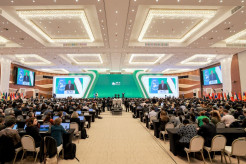
Welcome to issue #29 of A Voice for Nature that brings you a selection of news and updates on nature conservation in Eastern Europe and Central Asia. The year 2024 has begun dynamically with the arrival of our new regional director, and a CMS COP14 event in Samarkand, Uzbekistan where IUCN had a strong presence. During this event, we launched our new project on One health in nature conservation in Central Asia in a packed room, with government representatives from all five countries preent, attracting significant media attention.  

Our "In Focus" section this time features three articles related to the International Biodiversity Day, which has reminded us of the commitment needed from all stakeholders to protect nature. In its pre-Congress year, IUCN is convening Regional Conservation Fora. For Europe, North and Central Asia, the Forum will take place in Bruges at the end of September. We invite you to follow our new section for updates.

As always, we close the issue with recent publications and outreach materials and encourage you to mark and celebrate the forthcoming environmental days.

We thank all our contributors and wish you enjoyable reading.

IUCN ECARO Editorial

 
IN FOCUS
IUCN Director General’s statement for International Day for Biodiversity

Biodiversity is the tapestry of life on which we all depend. We are capable, through positive action, of halting and reversing biodiversity loss. This International Day for Biodiversity reminds us of the need to protect Planet Earth, and IUCN reaffirms its commitment to Be part of the Plan.

Read more
Achieving global goals through regional collaboration: Biodiversity Task Force for the Western Balkans

Themed “Be part of the Plan” 2024 International Day for Biodiversity calls for all stakeholders to halt and reverse biodiversity loss. What is the role of the Biodiversity Task Force for the Western Balkans?

Read more
World Heritage sites: Havens for Biodiversity in a Changing World

Climate change and biodiversity loss are two of the most important challenges and risks for human societies. But as the chairs of IUCN's seven expert Commissions write, the window of opportunity to address them is closing rapidly.

Read more
 
REGIONAL CONSERVATION FORUM EUROPE, NORTH AND CENTRAL ASIA - RCF24ENCA
Join us at RCF24ENCA this autumn
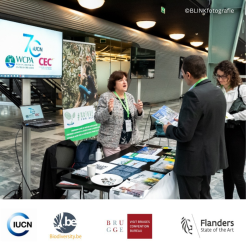
Every four years, IUCN convenes its Regional Conservation Fora, a crucial platform for Members, Commissions, and the Secretariat to prepare for the upcoming IUCN World Conservation Congress. Hosted by the Government of Flanders, the city of Bruges, and local partners, RCF24ENCA will bring together constituents from Europe, and North and Central Asia to present their work on sustainable development and conservation.
Read more about the programme and register
Call for Youth Volunteers

The RCF24ENCA is looking for 6 youth volunteers from Europe and North and Central Asia who are innovative thinkers and passionate about biodiversity, nature conservation, climate change, and sustainable development to join our team. These volunteers will help facilitate intergenerational events and manage meeting spaces throughout the Forum. Apply by 7 June!

Read more
 
LAND, WATER AND OCEAN
One Health nature conservation project in Central Asia launched by IUCN and partners

An IUCN-led international partnership has launched the One Health Central Asia project, aiming to mitigate the risk of zoonoses – diseases that are naturally transmissible from animals to humans – in Central Asia. The new initiative was announced at the 14th Conference of the Parties to the Convention on Migratory Species of Wild Animals (CMS COP14), in the presence of government representatives from partnering countries – Kazakhstan, the Kyrgyz Republic, Tajikistan, Turkmenistan, and Uzbekistan, the host country.

Read more
CMS COP14: IUCN welcomes the Samarkand Strategic Plan for Migratory Species

IUCN commends governments at the 14th meeting of the Conference of the Parties of the UN Convention on Migratory Species (CMS COP14) for having reached transformative decisions, including the adoption of the Samarkand Strategic Plan for Migratory Species 2024-2032, along with resolutions and decisions concerning deep-seabed mineral exploitation activities and their impact on migratory species. IUCN also celebrates the acknowledgment of the vital role played by Indigenous peoples and local communities in the conservation of migratory species, underscoring inclusive conservation efforts and practices.

Read more
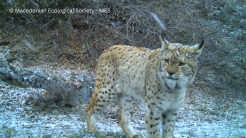
Better protection for the Balkan lynx

Good news from North Macedonia! This February at the CMS COP14 conference in Uzbekistan the Balkan lynx was added to the list of migratory species. The proposal to include the Balkan lynx in Appendix I of the Convention was made by the Ministry of Environment and Physical Planning and the Macedonian Ecological Society and supported by the governments of Albania, Uzbekistan and Bosnia.

Read more
Natura 2000 - A tool for nature conservation and sustainable development

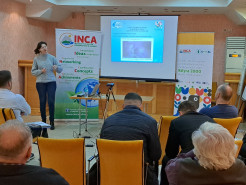
The piloting of the "Innovative Approach for Identification of Natura 2000 sites" in three pilot areas in Albania (Shkodra Lake, Vlora Bay and Shebenik National Park) was a positive experience, which not only facilitated the process of identifying potential Natura 2000 sites, but also created the appropriate conditions and instruments for initiating and continuing a constructive dialogue between the parties and various stakeholders in order to ensure sustainable management of the natural values of the area while preserve important habitats and species.

Read more
 
PEOPLE AND CLIMATE
Joining efforts to restore landscapes and land resources

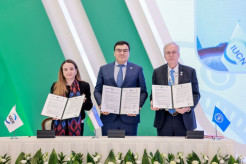
FAO, the Ministry of Ecology, Environmental Protection and Climate Change of Uzbekistan and IUCN signed the Letter of Intent during the CMS COP14, committing to continue cooperation and expedite preparation of a Letter of Agreement for joint implementation of the “Food systems, land use and restoration impact program in Uzbekistan”, which is a part of the Global FOLUR Impact Program.

Read more
CENN launched a new project “End Plastic Pollution in Georgia”

CENN, with the support of the United Nations Development Programme and Norway, and in partnership with the Ministry of Environmental Protection and Agriculture launched a project End Plastic Pollution in Georgia. The project aims to support  the authorities to increase the knowledge and capacity of stakeholders and the general public concerning circular models for plastic waste management.

Read more
 
ANNOUNCEMENTS AND OPPORTUNITIES
Guiding the next chapter: Oliver Avramoski appointed IUCN ECARO director

The IUCN Regional Office for Eastern Europe and Central Asia (ECARO) has appointed Oliver Avramoski as its new Regional Director. Avramoski steps into this role at a pivotal time, coinciding with the 20th anniversary of the establishment of the IUCN ECARO office in Belgrade, Serbia.

Read more
VACANCIES: Join our team
Nature-based Solutions Project Officer

The responsibilities of this experienced and enthusiastic individual will include project management, coordination, reporting, and fostering partnerships to promote Nature-based Solutions. Requirements: background in environment, climate, agriculture, forestry, or related; 5+ years of experience in project management and reporting; and work experience in Eastern Europe and Central Asia. Closes on 5 June. 

Apply here
Conservation Action Programme Assistant

This new position will support the management and coordination of projects, and assist with internal procedures, admin, and logistics. Requirements: background in Business Administration, Management, Finance, or related disciplines; 3+ years of experience in Project Management, preferably in the nonprofit sector, and excellent organisational and networking skills, amongst others. Closes on: 31 May.

Apply here
 
European Day of Parks 2024: Vote for Nature

In this year’s European Day of Parks, the EUROPARC Federation wants to highlight just how essential our Protected Areas are for the development and implementation of nature policies & their central role in ensuring a sustainable and resilient society for European citizens to live, work and enjoy. Let us all #VoteForNature and give some well-deserved support to our natural heritage. All information can be found here.

Read more
 
PUBLICATIONS AND OUTREACH MATERIAL
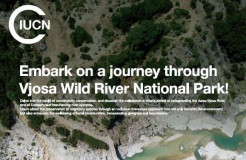
New StoryMap: A jouney to Vjosa Wild River National Park

Discover the collaborative efforts and partnership behind the connectivity conservation that benefits the environment and local communities.

Take the journey
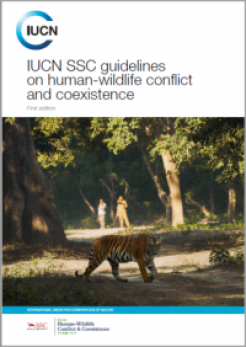
IUCN SSC guidelines on human-wildlife conflict and coexistence

As human-wildlife conflicts become more frequent, serious and widespread worldwide, they are notoriously challenging to resolve, and many efforts to address these conflicts struggle to make progress. These Guidelines provide an essential guide to understanding and resolving human-wildlife conflict. They have been developed for use by conservation practitioners, community leaders, decision-makers, researchers, government officers and others. Focusing on approaches and tools for analysis and decision-making, they are not limited to any particular species or region of the world. Available also in Russian.

Download the publication
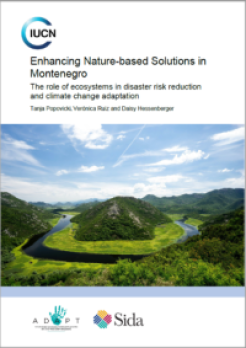
Enhancing Nature-Based Solutions in Montenegro
Montenegro is a disaster-prone country particularly vulnerable to climate change, thus affecting multiple sectors – agriculture, biodiversity, energy, forestry, public health, coastal areas and maritime resources, tourism and water resources. The combination of the rise in frequency and intensity of climate-related hazards, and increasing development in the country raises the risks of these hazards causing substantial economic and health impacts. The overall purpose of this scoping study is to provide the state-of-the art of the Montenegrin national context with regards to the application of Nature-based Solutions approaches for climate change adaptation and disaster risk reduction.
Download the publication
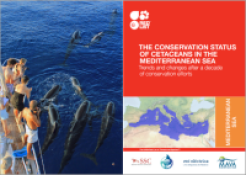
The conservation status of cetaceans in the Mediterranean Sea: trends and changes after a decade of conservation efforts
This report gives an overview of the status of Mediterranean cetaceans (whales and dolphins), informed by IUCN Red List assessments undertaken between 2018 and 2022. Compared to the first review by IUCN, published in 2012, these recent assessments provide better information on the status of resident Mediterranean subpopulations, thanks to improved regional monitoring. A total of 24 cetacean species have been recorded in the Mediterranean Sea, of which 10 are considered to be resident.
Download the publication
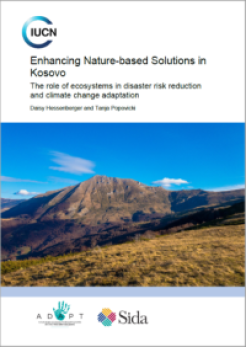
Enhancing Nature-Based Solutions in Kosovo
Kosovo is prone to a wide variety of natural hazards that could pose serious damages to the economy, fiscal balances, and the well-being of vulnerable populations. Many of these climatic-related hazards are expected to magnify with future climate change. These climate and disaster risks can seriously affect productive sectors of the economy, particularly agriculture, infrastructure, energy, water resources, and communities and households. The overall purpose of this scoping study is to provide the state-of-the art of the Kosovo national context with regards to the application of Nature-based Solutions approaches for climate change adaptation and disaster risk reduction.
Download the publication
 
EVENTS
5 June

#WorldEnvironmentDay #GenerationRestoration

World Environment Day 

17 June

#United4Land #DesertificationandDroughtDay

Desesrtification and Drought Day themed “United for land. Our Legacy. Our Future”

31 July

#WorldRangerDay

World Ranger Day

 
IN THE NEWS

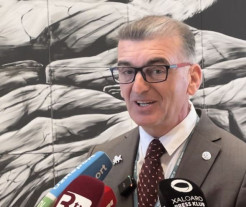
Many relevant media outlets shared the news on IUCN CARO’s new director, including Macedonian Information Agency (MIA), AlbSpirit, Nedeljnik and regional Balkan Green Energy News.

During her visit to Central Asia, IUCN Director General Grethel Aguilar gave statements to the national and regional media with wide reach: UzReport, Uzbekistan24, and Kazakh 24KZ. The news about the One Health in nature conservation project launch was shared by key media outlets in Central Asia, including the Uzbek UzRreport and Gazeta, Tajik Khovar, and Kyrgyz TAG.

 
JOIN IUCN COMMISSION
IUCN Expert Commissions

IUCN Commissions are broad and active networks of scientists and experts providing IUCN and its Members with sound know-how and policy advice to drive conservation and sustainable development. By joining one of them you are entering a committed community from around the world and across a wide range of disciplines. 

Learn more
 
BECOME IUCN MEMBER
Why join IUCN?

By joining IUCN, you will benefit from IUCN's scientific credibility, its unsurpassed knowledge base and convening power, extensive networking opportunities and access to high-level political, economic and social decision making. Being a Member of IUCN enables you to advance own cause and to strengthen common action in overcoming barriers to a sustainable future.

Learn more
 
DISCLAIMER

International Union for Conservation of Nature, Regional Office for Eastern Europe and Central Asia (IUCN ECARO)

Created in 1948, IUCN has evolved into the world’s largest and most diverse environmental network. It harnesses the experience, resources and reach of its 1,400 Member organisations and the input of some 15,000 experts. IUCN is the global authority on the status of the natural world and the measures needed to safeguard it. Our experts are organised into six commissions dedicated to species survival, environmental law, protected areas, social and economic policy, ecosystem management, and education and communication. Contributing to a sustainable future in Eastern Europe, North and Central Asia, IUCN ECARO focuses on good governance, long-term protection of biodiversity and sustainable use of natural resources.

Privacy Policy                                                   Sign up for an IUCN Newsletter 

IUCN ECARO Newsletter ‘A Voice for Nature’ contains third party articles. The views expressed in it do not necessarily reflect those of IUCN and the responsibility for the content of the published articles remains with the authors. Whilst IUCN Regional Office for Eastern Europe and Central Asia (ECARO) has used reasonable endeavors to ensure that the information provided in the newsletter is accurate, it accepts no liability for any errors, misprints or omissions herein (whether negligent or otherwise).The designation of geographical entities in this newsletter and the presentation of the material do not imply the expression of any opinion whatsoever on the part of IUCN concerning the legal status of any country, territory, or area, or of its authorities, or concerning the definition of its frontiers or boundaries.

The newsletter may point to other internet sites that may be of interest to you, however we do not endorse or take responsibility for their content. The information in this newsletter is provided free-of-charge; therefore you agree by receiving it that this disclaimer is reasonable.

Edited and published by IUCN ECARO, 2024.

Photo credits: A Voice for Nature cover, IUCN, Kanenori/Pixabay, Boris Erg, Taras Bains Okavango Delta, BLINKfotografie, BLINKfotografie, Ministry of Ecology, Environmental Protection and Climate Change of Uzbekistan, Ministry of Ecology, Environmental Protection and Climate Change of Uzbekistan, MES, INCA, Ministry of Ecology, Environmental Protection and Climate Change of Uzbekistan, UNDP/Gela Bedianashvili and CENN, IUCN, EUROPARK, StoryMap cover, IUCN SSC guidelines cover, NbS in Montenegro cover, IUCN Red List assessment cover, NbS in Kosovo cover, World Environment Day logo, Desertification and Drought Day logo, World Ranger Day logo, IUCN Commissions, Arber Xhaferaj.  


 Facebook  Twitter  Web  Youtube