View in your browser
ECOSYSTEM INSIDER

Ecosystem Insider brings you news from the IUCN Commission on Ecosystem Management

March 2024 Edition
Dear CEM members,

We are glad to share with you the first trimestral issue of 2024 of the Ecosystem Insider Newsletter by the IUCN Commission on Ecosystem Management.
CEM Highlights
NbS present at the United Nations Environmental Assembly 6

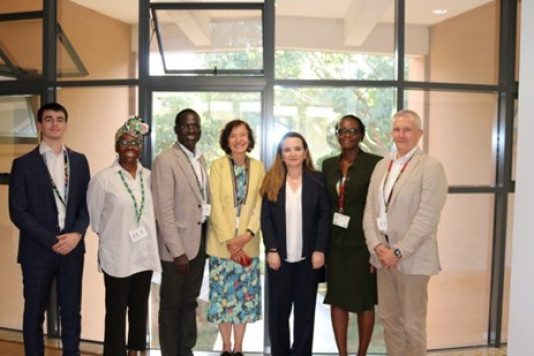
The United Nations Environmental Assembly 6 (UNEA 6) held in February in Nairobi, Kenya, was of great relevance for IUCN since the Government of Cameroon presented the resolution proposal: "Criteria, norms, standards, and guidelines for the implementation of NbS for Supporting Sustainable Development," making it necessary to interact with members to explain the potential of the IUCN Global Standard for NbS. CEM Chair, Angela Andrade, participated as part of the IUCN delegation with DG Grethel Aguilar, Stewart Magginis, Charles Karangwa, and Tommaso Demozzi, and among other activities, intervened in the official IUCN Side Event "Pathways for the Consistent and High-Integrity Application of Nature-based Solutions, the Role of the IUCN Global Standard," with the presentation "The IUCN Global Standard for NbS as the Main Operational Framework to Implement UNEA Resolution 5/5 on NbS for Supporting Sustainable Development." In the deliberations, several delegations recognized the IUCN Standard, emphasizing the need to move forward with the guidelines for its national-level application based on best practices and taking into account local contexts. These aspects are fundamental for advancing the implementation of NbS, including the development of necessary policy frameworks and enabling conditions, aspects that should undoubtedly be considered in the standard's review process.

 
Other News
National Workshop on the Role of Protected Areas for Biodiversity Conservation on March 12-13, 2023 at Kaziranga National Park & Tiger Reserve

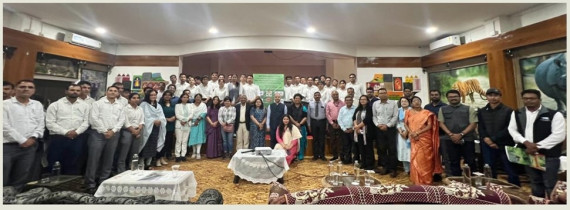
In collaboration with the Assam State Space Application Centre, Northeastern Space Applications Centre, Aaranyak and the IUCN Commission on Ecosystem Management, the National Workshop on the Role of Protected Areas for Biodiversity Conservation – A Geospatial Perspective took place. Steered by Kaziranga National Park & Tiger Reserve, the workshop brought together a distinguished assembly of professionals to discuss the pivotal role of protected areas and the cutting-edge use of geospatial technologies in safeguarding the biodiversity.

The keynote address was delivered by Dr. P.S. Roy, Senior Fellow at the World Resources Institute, India delved into the complexities of habitat destruction, climate change, and human-animal conflicts, underscoring the critical need for innovative solutions in biodiversity conservation.

Through insightful discussions on geospatial technologies, innovative research presentations, field trips, and cultural immersions with Karbi tribes, participants were given a holistic view of biodiversity conservation. In addition to highlighting the importance of protected areas and technological advancements in conserving biodiversity, it also highlighted the importance of integrating indigenous knowledge and community involvement.

 
Young Professional Network from Mexico, Latin America and Caribbean 1st Gathering of the year

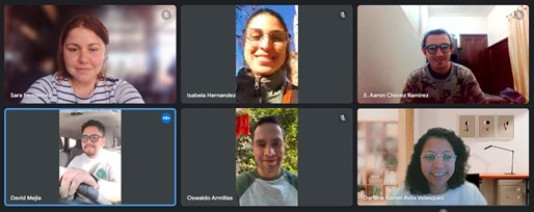
On February 24th, the Young Professional Network from Mexico, Central America and the Caribbean hosted the first virtual meeting of 2024, where new members were welcomed and progress and future plans were discussed. Dariana Avila, MCAC YPN Lead gave a briefing on the upcoming activities and for the region such as the participation of several YPs members at the Second IUCN Mexican Forum.

 
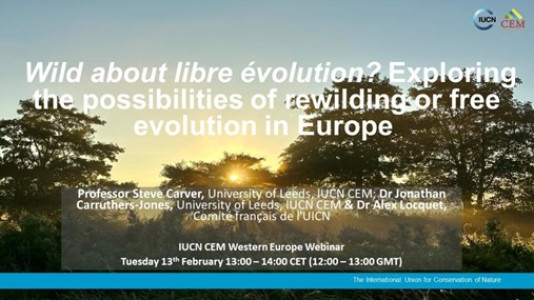
Wild about libre evolution? Exploring the possibilities of rewilding or free evolution in Europe

A webinar was hosted on Wild about libre évolution? Exploring the possibilities of rewilding or free evolution in Europe presented by Professor Steve Carver from tbe University of Leeds, and CEM Rewilding Co-Chair along with Dr Jonathan Carruthers-Jones, from the University of Leeds, and Dr Alex Locquet, from the Comité français de l'UICN.

Watch the full webinar here
 
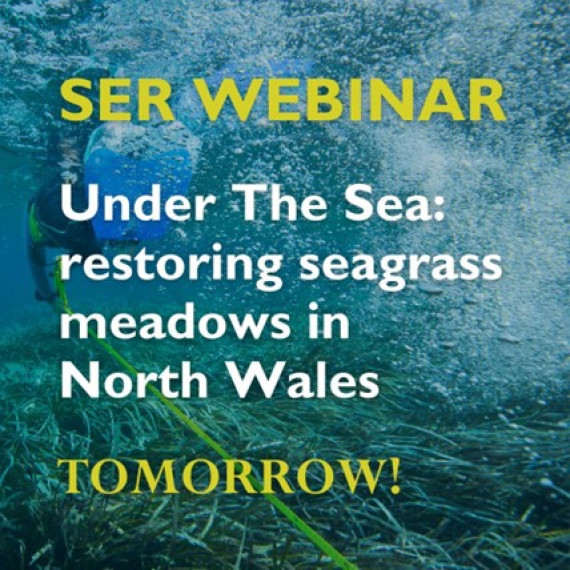
Under the sea: restoring seagrass meadows in North Wales 

The CEM Restoration Thematic Group hosted their monthly webinar last March 28th titled Under the sea: restoring seagrass meadows in North Wales to address the decline of seagrass meadows around the United Kingdom, the Seagrass Ocean Rescue North Wales project was initiated as a transdisciplinary and collaborative effort involving Project Seagrass, Swansea University, two Welsh NGOs, and WWF. This webinar will discuss the project's progress in planting seagrass over 10 hectares across North Wales by 2026, highlighting science-based restoration methods, lessons learned, community engagement, and future restoration plans. Additionally, webinar presenter and SER member, Stijn den Haan, will provide insights into the project's next steps, that have the potential to benefit seagrass restoration efforts beyond North Wales.

 
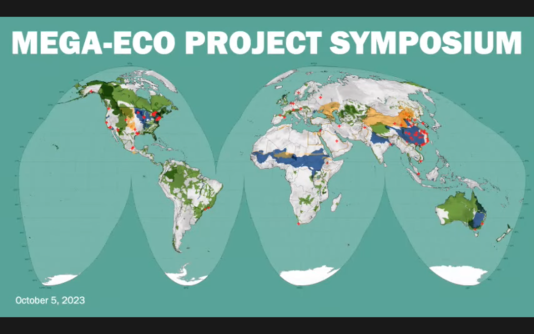
MEGA-ECO: A Symposium on Very Large-Scale Landscape Projects

The MegaEco Symposium on very large Landscape projects was held at the University of Pennsylvania, Philadelphia, USA, on October 5-6. During the Symposium, a number of inspirational large-scale projects from Africa, North and South America, and Asia were presented. Emmanuelle Cohen-Shacham, CEM NbS TG Lead, was in the experts panel and during her interventions, she emphasized the importance of the IUCN work when defining and implementing NbS. She specifically referred to important aspects of the NbS Global Standard's criteria: the need for societal challenges definition and prioritisation, policy integration, multi stakeholders’ participation, and taking into account the different contexts - when planning, assessing and upscaling NbS interventions.

The recordings of the Symposium's sessions can be viewed here.

 
Upcoming Events
CEM Dialogue: Red List of Ecosystems: A tool to evaluate the status of ecosystems in the CBD Framework (in Spanish)

The CEM South America Region along with the IUCN South American Regional Office will be hosting the next CEM Dialogue to discuss the importance of the IUCN Red List of Ecosystems (RLE) and how it can be used to assess the conservation status of ecosystems within the framework of the Convention on Biological Diversity (CBD).

In this webinar, Irene Zager, RLE specialist and member of the CEM, will talk about the global typology of ecosystems used as part of the RLE methodology. Marcos Valderrabano, coordinator of the IUCN Global RLE Program, will present how the RLE is used in the context of CBD monitoring, including examples and applications at different scales. Andrés Etter, RLE specialist and member of the CEM, will present the case study developed in Colombia. Gabriel Quijandría, Regional Director of IUCN South, will comment on the potential use of this tool in the region.

If you want to learn more about the usefulness of the RLE, case studies, and applications at different scales, this event is for you!

Register for the CEM Dialogue here.

Forest to Bog Restoration – Demonstrating Success

The IUCN UK Peatlands Programme is running a webinar on April 17 at 2pm UK time to celebrate the release of the publication which will explore case studies from across the UK, looking at the challenges and opportunities presented by each project as well as celebrating their key successes and future ambitions. The case studies will be presented by Benmore Forest and Dalchork Forests, Scotland - Tim Cockerill, Forestry and Land Scotland and Ian McKee, Peatland ACTION Manager for Technical Advice at NatureScot Rhigos Mountains, Wales - Joseph Pickard, Lost Peatlands Project Ecologist at Neath Port Talbot County Borough Council and Dr Jon Walker from Swansea University Tullychurry Forest, Northern Ireland - Diane Foster, Catchment Project Manager External Funding at NI Water and Kerry Morris, Catchment Liaison Officer at NI Water Marches Mosses, England - Robert Duff, Senior Advisor Peatlands & Restoration, Natural England.

Find out more and register here.

Getting the Wetlands Specialist Group up and Running

The CEM Wetlands Specialist Group is emerging from its hibernation, and has started the process of developing its workplan, recruiting core team members, and prioritising its future work. A survey was circulated to all members, identifying key priorities, areas of expertise, past experience with the group, and location. Consultation with other groups has started as well, with the small core team reaching out to members of other commissions and professional organisations, and identifying current international processes related to wetland research and conservation, as a landing point for the work of the group. Plans include webinars, collaboration with the Convention on Wetlands and the Society for Wetland Scientists, and targeted publications. 

We are still looking for new core team members, especially motivated early career researchers. Please get in touch with Tatiana Lobato, CEM Wetlands Specialist Group lead if you would like to contribute, or collaborate.

 
Latest publications
IUCN UK Peatland Programme ‘Forest to Bog Restoration: Demonstrating Success’ publication

The IUCN UK Peatland Programme has launched a new publication showcasing successes in forest to bog restoration in the UK. Plantation forestry (predominantly conifer) covers approximately 18% (439,410 ha) of the UK’s peatlands and has had significant adverse impacts on biodiversity and functionality of peatland habitats, including the loss or displacement of specially adapted plant and animal communities. 

The publication ‘Forest to Bog Restoration: Demonstrating Success’ highlights how the practice of restoring afforested peatlands has advanced significantly in the UK, thanks to the collaborative nature of the peatland restoration community. Compared to other restoration activities, it can be a much more involved, complex and costly undertaking. However, as this publication demonstrates, it is possible to successfully rehabilitate these damaged areas of peatland and put them on a pathway to recovery of their beneficial climate and biodiversity functions.  

As well as looking at the detail of forest to bog restoration, the new publication showcases some success stories. The case studies, from across the UK, look at the challenges and opportunities presented by each project as well as celebrating their key successes and future ambitions.  

IUCN UK Peatland Programme ‘Forest to Bog Restoration: Demonstrating Success’ publication

Read the publication to find out more.

 
Fisheries and the Targets of the GBF – Opportunities, Challenges and Concerns

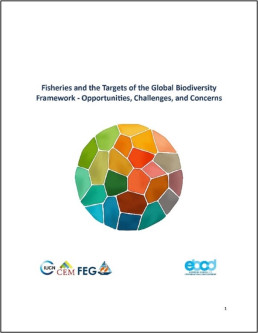
Following the adoption of the historic Kunming-Montreal Global Biodiversity Framework (GBF) in December 2022, a process in which FEG actively participated over the last years, man

y governments, international organizations, stakeholders, and NGOs moved swiftly to analyse and understand the Targets. In light of this, FEG launched a project on the implementation of the GBF in relation to fisheries, reviewing the numerous Targets and their implications for the sector. Gaps, possible redundancies, and implementation challenges and opportunities were identified.

The report, which can be found here, will contribute to the ongoing work on GBF implementation guidelines being undertaken by various organizations, such as the CBD and FA

 
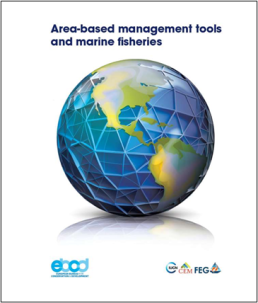
Area-based Management Tools and Marine Fisheries – New Report

FEG also recently published a report on Area-based Management Tools (ABMTs) and marine fisheries, which can be found here. The report presents a comprehensive review of the nature, use, and effectiveness of ABMTs at the interface between fisheries and biodiversity conservation and could prove useful for scientists, advisers and managers in implementing the GBF, as well as the recently adopted BBNJ Agreement which features ABMTs prominently.

Figure 1: The cover pages of FEG's publications on a) the implications of the Global Biodiversity Framework for fisheries, and b) Area-based Management Tools and marine fisheries.


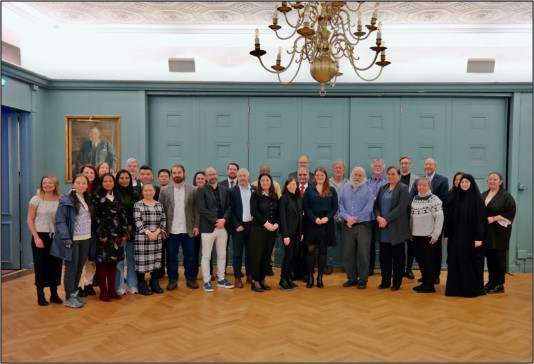
Continuing to play a part in the efforts being made to streamline the implementation of the GBF, FEG repeatedly contributes to online consultations and participates in various CBD workshops and meetings it was invited to, such as the in-person workshop on Ecologically or Biologically Significant Areas (EBSAs) held in Oslo from November 20 to 27, 2023 (see image below). In 2024, FEG will be attending the CBD’s SBSTTA meeting, the CBD COP, the CBD’s Sustainable Ocean Initiative (SOI) Global Dialogue, the UN Fish Stocks Agreement consultations, and the prep. com. for the BBNJ.

The CEM Fisheries Expert Group Task Force is actively engaged in the work of IUCN’s Resolution #107 (reducing the impact of fisheries on marine biodiversity) and #18 (on valuing and protecting inland fisheries).

Figure 2: FEG members Jake Rice and Eskild Kirkegaard in attendance at the CBD’s workshop on Ecologically or Biologically Significant Areas held in Oslo, 23-29 September. (Photo credits: CBD Marine and Coastal Biodiversity Office)

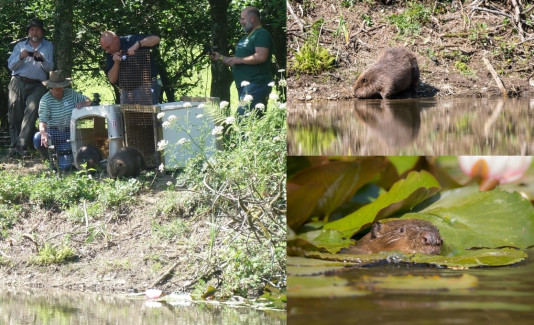
Jones M and Jones C (2023) The Cornwall Beaver Project: navigating the social-ecological complexity of rewilding as a nature-based solution. Front. Conservation. Sci. 4:1252275. 

The story of the Cornwall Beaver Project is presented as the foundation of a review of the literature to consider the effects of beavers on geomorphological and hydrological processes, habitats, biodiversity, and people in agricultural landscapes in the UK. The review includes a comparison of the principles for rewilding as an approach to ecological restoration with IUCNs principles for Nature-based Solutions together with a summary of beaver reintroduction in Europe, and the impacts of beavers on hydrological and geomorphological processes, biodiversity and the human-wildlife conflict that arises from reintroduction. Our review proposes a low conflict strategy for rewilding with beavers that includes changes from a policy of conflict avoidance to a proactive policy to support practices that apply the tools of social-ecological systems science to the body of knowledge about the interactions between beavers and their environment.

Read it here.

Photos taken on the day of the release of a pair of beavers on Woodöand Valley Farm in 2017. Paper co-author Chris Jones is holding up the front of the cage in which one of the beavers was transported to the farm.

Clement, S., A. Garmestani, J. Beckwith and P. Cannon. 2024. To burn or not to burn: governance of wildfires in Australia. Ecology and Society 29(1):8. 

Globally, wildfires are increasing in extent, frequency, and severity. While global climate change is a major driver and large-scale governance interventions are essential, focusing on governance at smaller scales is of great importance for fostering resilience to wildfires. Inherent tensions in managing wildfire risk are evident at such scales, as objectives and mandates may conflict, and trade-offs and impacts vary across ecosystems and communities. The study feeds into debates about how to manage wildfire risk to life and property in a way that does not undermine biodiversity and amenity values in social-ecological systems. In this paper, the authors describe a case study where features of adaptive governance emerged organically from a dedicated planning process for wildfire governance in Australia. The process enabled actors to question whether the default risk management option (in this case, prescribed burning) is aligned with place-based risks and values so they could make an informed choice, built from their participation in the governance process. This study offers positive insights for other governments around the world interested in pursuing alternative strategies to confronting wildfire risk.

Read it here.

Angeler, D.G., A. Garmestani, C.R. Allen and L. Gunderson. 2023. Moving beyond the panarchy heuristic. Advances in Ecological Research. 69: 69 81.

Systems of people and nature self-organize at multiple scales leading to uncertain dynamics and difficulties in prediction. This uncertainty manifests in accelerating change of social-ecological systems in the Anthropocene and has created an urgency for understanding and managing resilience of complex systems of people and nature. Panarchy, a heuristic or model of nature (Gunderson and Holling, 2002), envisions system change within and across multiple spatiotemporal scales. It provides opportunities to confront and navigate the intensifying sustainability challenges for humanity, such as the increasing risk of regime shifts from local to global scales (Hughes et al., 2013). Here, we provide a roadmap that discusses an extension of current, preliminary approaches to quantify panarchy and critically test the concept. Quantifying panarchy holistically ultimately requires spatiotemporal methods that integrally assess cross-scale structures, identify and assess key ecological drivers at each scale, assess information flow and feedbacks, and identify and quantify within and across spatiotemporal scales.

Read it here.

 
Newsletters


Subscribe to an IUCN Newsletter

International Union for Conservation of Nature (IUCN) © 2024

The CEM Newsletter aims to keep IUCN CEM members, IUCN staff, and the wider IUCN network up-to-date with ecosystem management news and announcements. 

Thank you for reading us and don’t forget to follow us on our social media channels

 Facebook  Twitter  Instagram

Unsubscribe  - By unsubscribing to this newsletter you are unsubscribing from all future IUCN announcements