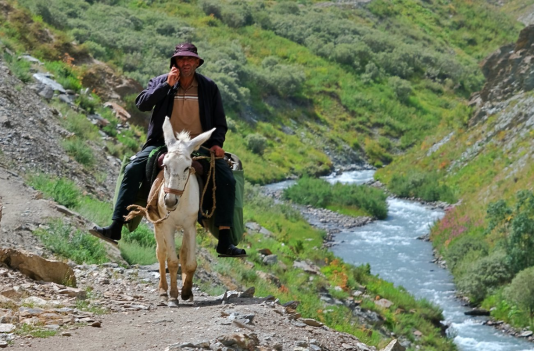
Welcome to the latest edition of the IUCN Newsletter. This month, among general news of our collective IUCN work on protected and conserved areas worldwide, we promote a topic of profound significance – the recognition of the rights of Indigenous peoples, and the indispensable role they have played in conserving nature, and will continue to play as we look ahead to 2030 and beyond. The relationship between Indigenous communities and their ancestral lands is a testament to the harmonious coexistence that is achievable between people and nature. For generations, Indigenous peoples have been the guardians of some of the world's most biodiverse and ecologically sensitive regions. Their deep-rooted knowledge, holistic understanding of ecosystems, governance, customary laws and sustainable practices have enabled these landscapes to thrive for centuries. However, this essential partnership has often been marred by historical injustices, marginalisation, and the denial of basic rights. In recent decades, the international community has made significant strides in acknowledging the significance of Indigenous wisdom and practices in the realm of conservation. The United Nations Declaration on the Rights of Indigenous Peoples (UNDRIP) and other global initiatives have paved the way for recognising the critical role of indigenous communities in safeguarding biodiversity and ecological balance. IUCN’s Protected and Conserved Areas Team are committed to implementing two significant Resolutions, that in turn reference and capture the essence of many other commitments to the rights of Indigenous peoples and local communities. These resolutions are Resolution WCC-2020-002 on full engagement of Indigenous peoples and local communities in the design, development and implementation of conservation programmes; and Resolution WCC-2020-125 on fairly and effectively conserving at least 30% of the planet. The newly adopted CBD Global Biodiversity Framework also contains important and unprecedented language on the rights of Indigenous peoples, including over their territories. In two articles in this newsletter we delve into the pressing need to reaffirm and reiterate the rights of Indigenous peoples. Their inclusion in decision-making processes, land tenure security, and cultural preservation are not just ethical imperatives, but integral aspects of successful conservation efforts. As we confront the complex challenges posed by climate change, habitat loss, and biodiversity decline, indigenous knowledge offers invaluable insights into resilient and adaptive strategies that can benefit both people and nature. From the heart of Patagonia, the story of the Kawésqar reminds us that the conservation narrative cannot be complete without their voices and contributions. Their story is important and we are delighted to give their voice to you, through this newsletter. We also feature a photo story on the Territory of Life of the Yaghnobi people from the Republic of Tajikistan, with a recent publication showcasing the importance of these areas in Central Asia and the Caucasus. There are many similar stories, worldwide, from Aboriginal Tasmania, Australia to Sami Tana, northern Finland. In engaging with the International Indigenous Forum on Biodiversity (IIFB) in the Podong Initiative, IUCN is setting the bar high for ourselves as an institution to really put words into action, guided by the IIFB’s important network of indigenous expertise and representation, and by our other Indigenous Peoples Organisation members’ voices and support. Moreover, in promoting the new Podong Initiative in this newsletter, we highlight the collaborative efforts underway between IIFB and the Protected and Conserved Areas Team, to bridge the gap between indigenous wisdom and modern conservation science. By fostering meaningful partnerships, respecting traditional governance systems, and integrating local knowledge into conservation strategies, we can pave a more inclusive and effective path forward. As we continue to advocate for the recognition and empowerment of Indigenous peoples, let us remember that our work is interconnected. The conservation challenges we face are global in nature, transcending boundaries and cultures. By standing in solidarity with Indigenous communities, we not only honour their rights but also acknowledge the interdependence between humanity and the natural world. We invite you to follow-up and research more of these stories, insights, and initiatives that IUCN and our members are engaged in. May they serve as a source of inspiration and motivation, propelling us to champion the cause of Indigenous peoples' rights and inclusive conservation in all our endeavours. Thank you for your unwavering commitment to the planet and its people. |